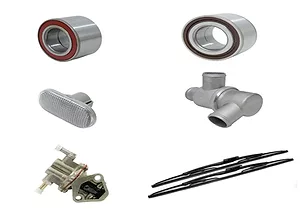
Providing parts and sub-assemblies to automotive production lines is a highly complex activity, requiring rapid, automated sequencing and sophisticated error proofing. Bo Cheng, director of the automotive business at Comprehensive Logistics, explains how his company is keeping pace as automotive volumes return to pre-recession levels.
A Carson, Calif.-based company is trying to position itself at the perfect intersection of online DIY and the nation's aging fleet of personal vehicles. U.S. Auto Parts Network Inc. caters to do-it-yourselfers. It sells to people whose idea of the perfect weekend morning is getting some grease under the fingernails while working on their cars, trucks and SUVs.
The proportion of vehicles sold worldwide with some degree of autonomous capability is expected to reach 75 percent by 2035, according to a recent report from Navigant Research.
For the past four years, Julio Cesar Lestido S.A., the official Uruguayan importer of cars and trucks manufactured by the Volkswagen Group, has been employing passive ultrahigh-frequency RFID tags to track the metal tools it uses to maintain vehicles. The company says that it is now developing a plan to utilize the technology to record each vehicle's life history, including its date of import and sales information, as well as all maintenance provided.
Industrial machinery production - which represents $1.6tr of the $3.8tr global industrial capital expenditure spending in 2013 - is the area to be most dramatically affected by advancing 3D printing technology, says Alex Chausovksy, senior principal analyst, industrial automation, at IHS.
OEMs' insistence on more and more cost reductions has caused painful friction in the relationship, according to the annual Global OEM-Supplier Relations Study conducted by IHS Automotive. The survey allows automotive suppliers to rate car makers on a variety of matters, including technology sourcing, profit-impacting factors, quality management and intellectual property protection matters.