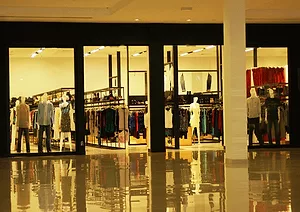
Americans increasingly would rather spend their money making memories - travel, sporting events, concerts, meals out - than on another outfit, retail consultants say. So, after years of choosing the speed and wide selection offered by big-box retailers such as Home Depot or online merchants like Amazon.com, customers are demanding higher engagement if they're going to buy something in a store.
The rate of adoption for radio frequency identification in the retail apparel, footwear and accessories market has more than doubled during the past two years, according to a survey of 60 European and U.S. retailers and wholesalers, conducted by management and strategy consulting firm Kurt Salmon.
Picture yourself entering a department store and, instead of wandering around searching for the correct department or product, you are guided by an expert personal concierge. The concierge is not a person, but rather a humanlike smartphone assistant. Whether you want to know "where are women's shoes located?" or "is this dress available in size six?" this concierge is always at hand to assist you. This is what retail shopping may be fast becoming, thanks to the mass proliferation of artificial intelligence (AI)-based technologies.
Cotton, the most widely used natural fiber, is considered the world's dirtiest crop because of its heavy use of pesticides - its cultivation accounts for 17.5 percent of global insecticide sales. So in recent years, several apparel and home-goods companies, including Eileen Fisher, Patagonia, and Nike, have used organic cotton, grown by farmers who eschew pesticides and enrich their soil with compost. That's good for the environment but raises another big problem: Organic cotton is too expensive for average shoppers.
A new generation of footwear manufacturing, spearheaded by Bill McInnis, head of future at Reebok and a former NASA engineer, is allowing the fitness brand to design and create a high performance athletic shoe faster and more efficiently than ever before, the company says.
Startup Sewbo has announced that it used a robot to sew a T-shirt, producing the world's first robotically-sewn garment, which could mark a significant change for the global garment industry.
Macy's plans to have all items in every store tagged by the end of 2017, according to Bill Connell, senior VP of logistics and operations. To achieve this goal, the retailer is asking all of its product vendors to supply merchandise already fitted with passive ultrahigh-frequency (UHF) RFID tags based on the Electronic Product Code Gen 2 standard.
Challenge: This top-tier athletic footwear manufacturer relied on manually-intensive methods for managing purchase orders and found it difficult to track inbound shipments for complete end-to-end visibility. The company needed quicker access to supplier information and purchase order information with several hundred vendors and factories more efficiently.
Etihad Cargo has signed a deal with forwarder Trinity Logistics USA, Inc., to operate a weekly widebody freighter service to deliver couture clothing items from Sri Lanka to Rickenbacker International Airport (LCK) in Columbus, Ohio, Etihad announced.
Outdoor apparel retailer REI has designed its new distribution center to be both energy and workflow efficient. The DC, in the Arizona desert, is a net-zero energy facility and will provide to co-op retailer with 20 years of free energy, according to Rick Bingle, REI's vice president of supply chain.