Many companies unintentionally have created departmental silos within their organizations. Information and products go back and forth between the different functional areas, but the customer is often missing from the process. When lean supply chain strategies, which focus on eliminating waste, are implemented, once again the customer is often times left out. Instead of focusing on the client, the company focuses internally to improve processes. Research shows that undertaking a lean supply chain journey that extends outside the four walls of the organization significantly improves the customer experience, company productivity and the bottom line. - Eric Lail, VP, Continuous Improvement and Client Services, Transportation Insight
Analyst Insight: Direct delivery of orders to the customer's doorstep is a hot topic for transportation and logistics executives"”from giants like Amazon to mom-and-pop specialty retailers. In particular, there is a lot of buzz around the direct-to-consumer cold chain. Free delivery and free returns, combined with the complexity and cost of cold chain distribution center (DC) and delivery assets, make for a chief marketing officer's dream and a chief financial officer's nightmare. How can you get this capability just right? - Don Anderson, Principal, Tompkins International
In her August 2013 report, SUPPLY CHAIN TALENT: THE MISSING LINK IN YOUR FUTURE? Supply Chain Insights' Lora Cecere noted that "Companies are feeling the pain of open positions... The talent shortage is greatest for middle-management positions."
More than a third of manufacturing firms in the small and mid-sized business (SMB) sector expect the economy to strengthen in the coming six months, while nearly half expect it to remain the same, according to the results of the second annual Sage Manufacturing Survey announced by Sage North America. Respondents also anticipate an increase in orders, production and exports.
I was privileged to accompany the 2001 U.S. Logistics Leaders delegation to Cuba, and ended up being the expedition's recording secretary. The trip diary outlined our activities and contacts, and plunged into observations about supply chain and logistics conditions in the island nation, an inescapable force in the Caribbean Basin, a significant presence among islands it dwarfed, and with a population of some thirteen million. The trip record was published in The Journal of Business Logistics later that year.
Big data is the all the rage and getting tons of press as it has allowed manufacturers and supply chain executives to create new and compelling data-driven strategies that help them compete, innovate and capture wallet-share. Perhaps fueled in part by the likes of leading database vendors or system integrators (SIs) looking to cash in on high-dollar predictive analytic and scoring engagements, big data represents many things to many people, but one of the most pragmatic applications is mastering all the data elements used in a business infrastructure. The term commonly used for this process is master data management, or MDM.
Good forecasting is a blend of both art and science, according to Thomas Schleicher, senior director of measurement science, at the National Consumer Panel. He discusses the scientific measurement aspects of forecasting as well as the art of collaborating across functions to make informed assumptions.
The competitive pressure on members of the global electronics sector has never been greater. While electronics OEMs recognize that their supply chains represent a significant opportunity to gain efficiencies, reduce cost and boost market share, many struggle to take their supply chain process improvement efforts beyond the proverbial low-hanging fruit.
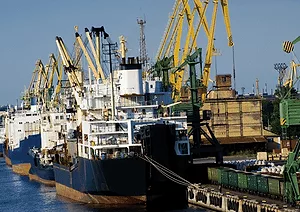
NGO Shipbreaking Platform, a global coalition of organizations seeking to prevent dirty and dangerous shipbreaking practices worldwide, has published the complete list of ships that were dismantled around in the world in 2013. Of the 1213 large ocean-going vessels that were scrapped in 2013, 645 were sold to substandard beaching facilities in India, Pakistan and Bangladesh, says the group. Approximately 40 per cent of these ships were EU-owned.