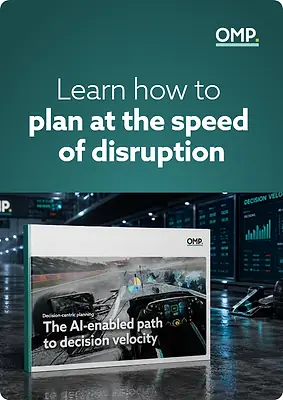
Despite major investments in AI, real-time visibility, and faster planning tools, many supply chain organizations continue to battle constant firefighting, expediting, and poor plan adherence. Why do these challenges persist? The answer may be that speed alone isn't enough.
Today’s world is more unpredictable than ever. From regulatory upheavals and trade tariffs to sudden shifts in consumer demand, businesses must be ready to respond swiftly and decisively. Traditional planning processes struggle to keep up with the urgent risks and opportunities that arise between meetings, triggering constant re-planning and creating room for misalignment and disorder.
Maintaining exceptional service levels to ensure quality patient care is critical to AstraZeneca, a biopharmaceutical company. But for years, its exceptional service levels came at a cost for the company in the form of elevated inventory levels and planning decisions made with limited end-to-end visibility into its supply chain, which impacted agility and growth.
Life sciences supply chains are among the most complex in the world. Every day, supply chain leaders must balance shifting demand, constrained supply, and strict regulatory requirements, all while ensuring patients get the medications they need. The margin for error is small, and disconnected, stage-by-stage planning just cannot keep up.
How do you plan for a technology that doesn't exist yet, while keeping today's production lines running? That's the challenge Bekaert faced with its titanium fiber-based porous transport layers, a breakthrough component powering industrial-scale green hydrogen production
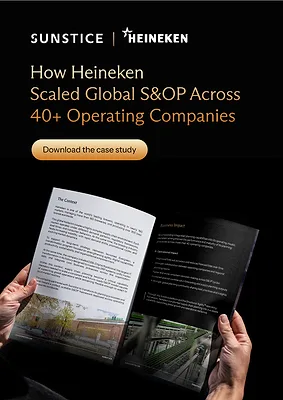
Heineken operates one of the world's most complex brewing supply chains, producing more than 350 brands across 160 breweries and serving nearly 190 markets. At this scale, planning requires continuous alignment of demand forecasts, production capacity, and inventory flows across dozens of operating companies — a challenge compounded by the historical reliance on locally developed planning tools that varied from market to market.
For years, supply chain organizations approached demand forecasting by looking backward, with historical sales trends, seasonal cycles and prior purchasing behavior forming the foundation for most planning decisions. But in an environment shaped by geopolitical instability, tariffs and volatile consumer demand, many organizations are realizing that the forecasting models of the past simply can’t keep up with the disruptions of today.
A lot of the conversation about supply chain optimization occurs within retailer organizations. But how does that actually impact the customer experience?
The latest news, analysis, trends and solutions regarding inventory planning and optimization and its impact on supply chain management. New technologies in inventory planning and optimization are transforming the way companies operate - and allowing them to stay ahead of the competition in their industries. As these solutions continue to evolve, businesses are discovering new ways to increase efficiency and cut costs. Learn how companies around the world are using inventory planning solutions for supply chain optimization.
Subscribe to our Daily Newsletter!
Timely, incisive articles delivered directly to your inbox.