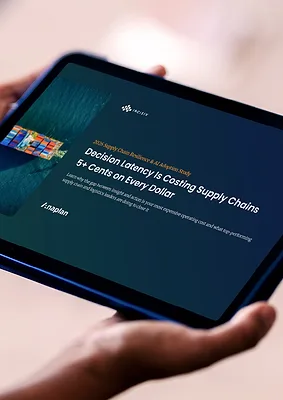
Despite major investments in AI, real-time visibility, and faster planning tools, many supply chain organizations continue to battle constant firefighting, expediting, and poor plan adherence. Why do these challenges persist? The answer may be that speed alone isn't enough.
Sometimes the supply chain work needed to make integration of business partners or systems successful is overlooked, says Philip Weir, chief commercial officer at Elemica.
When e-commerce demand surged during the COVID-19 pandemic, cold chain logistics provider eGourmet Solutions faced a defining test of its operational scalability.
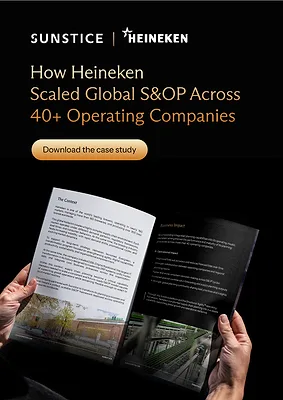
Heineken operates one of the world's most complex brewing supply chains, producing more than 350 brands across 160 breweries and serving nearly 190 markets. At this scale, planning requires continuous alignment of demand forecasts, production capacity, and inventory flows across dozens of operating companies — a challenge compounded by the historical reliance on locally developed planning tools that varied from market to market.
The challenge is understanding how regulatory changes influence shopper behavior, conversion rates, profitability and expansion opportunities across every market you serve.
Alenka Turnsek, tax sustainability leader with EY, lays out the challenges that fashion supply chains face in coping with overlapping regulations and tax policies in global markets.
Incisiv’s 2026 supply chain resilience report, conducted in partnership with Anaplan, assesses the current state of supply chain operations by surveying industry leaders across North America and EMEA. By examining strategic priorities, demand-supply responsiveness, technology and AI infrastructure, and financial outcomes, the research uncovers the critical financial impact of the “latency tax”— the hidden cost of delayed decision-making — and how to reclaim that margin.
Modern leaders need data-driven insights to make confident, real-time decisions that shield margins, enhance supply chain operations, and enrich customer experiences. As executives face a deluge of data points, this isn’t always straightforward. Global supply chain organizations face additional uncertainty — ranging from shifting environmental conditions to geopolitical disruption.
The latest news, analysis, trends and solutions regarding supply chain finance and revenue management. New technologies in finance and revenue management are transforming the way companies operate - and allowing them to stay ahead of the competition in their industries. As these solutions continue to evolve, businesses are discovering new ways to increase efficiency and cut costs. Learn how companies around the world are using finance and revenue management solutions for supply chain optimization.
Subscribe to our Daily Newsletter!
Timely, incisive articles delivered directly to your inbox.