
• Advertise
  • Contact Us
  • Supplier Directory
  • SCB YouTube
  • About Us
  • Login
  • Subscribe
  • Logout
  • My Profile
  • LOGISTICS
    • Air Cargo
    • All Logistics
    • Facility Location Planning
    • Freight Forwarding/Customs Brokerage
    • Global Gateways
    • Global Logistics
    • Last Mile Delivery
    • Logistics Outsourcing
    • LTL/Truckload Services
    • Ocean Transportation
    • Parcel & Express
    • Rail & Intermodal
    • Reverse Logistics
    • Service Parts Management
    • Transportation & Distribution
  • TECHNOLOGY
    • All Technology
    • Artificial Intelligence
    • Cloud & On-Demand Systems
    • Data Management (Big Data/IoT/Blockchain)
    • ERP & Enterprise Systems
    • Forecasting & Demand Planning
    • Global Trade Management
    • Inventory Planning/ Optimization
    • Product Lifecycle Management
    • Robotics
    • Sales & Operations Planning
    • SC Finance & Revenue Management
    • SC Planning & Optimization
    • Supply Chain Visibility
    • Transportation Management
  • GENERAL SCM
    • Business Strategy Alignment
    • Customer Relationship Management
    • Education & Professional Development
    • Global Supply Chain Management
    • Global Trade & Economics
    • Green Energy
    • HR & Labor Management
    • Quality & Metrics
    • Regulation & Compliance
    • Sourcing/Procurement/SRM
    • SC Security & Risk Mgmt
    • Supply Chains in Crisis
    • Sustainability & Corporate Social Responsibility
  • WAREHOUSING
    • All Warehouse Services
    • Conveyors & Sortation
    • Lift Trucks & AGVs
    • Order Management & Fulfillment
    • Packaging
    • RFID, Barcode, Mobility & Voice
    • Warehouse Automation
    • Warehouse Management Systems
  • INDUSTRIES
    • Aerospace & Defense
    • Apparel
    • Automotive
    • Chemicals & Energy
    • Consumer Packaged Goods
    • E-Commerce/Omni-Channel
    • Food & Beverage
    • Healthcare
    • High-Tech/Electronics
    • Industrial Manufacturing
    • Pharmaceutical/Biotech
    • Retail
  • THINK TANK
  • WEBINARS
    • On-Demand Webinars
    • Upcoming Webinars
    • Webinar Library
  • PODCASTS
  • WHITEPAPERS
  • VIDEOS
Home » Blogs » Think Tank » Time for Manufacturers to Throw Out Old Ideas About Inventory Management

Think Tank
Think Tank RSS FeedRSS

Time for Manufacturers to Throw Out Old Ideas About Inventory Management

Inventory Management
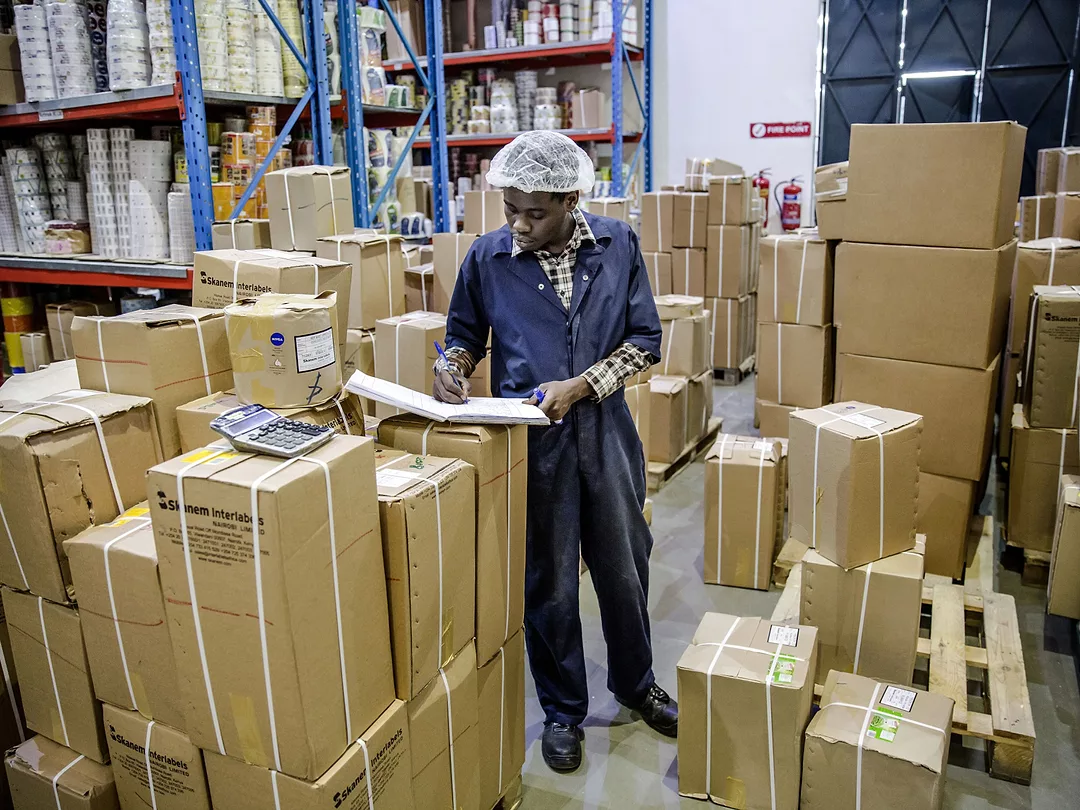
Photo: Bloomberg
October 26, 2020
Robert J. Bowman, SupplyChainBrain

Innovative supply-chain strategies that seemed so perfectly attuned to current purchasing patterns have turned out to carry a lot more risk than their creators could ever have imagined.

Take just-in-time delivery of parts to the factory floor. As a means of slashing standing inventory, and lightening that classic drag on the balance sheet, JIT looked great on paper. Indeed, the strategy has resulted in far higher levels of efficiency in factories and supply lines, especially when married with Lean concepts for eliminating waste. But what happens when a factory goes down, a supplier fails, or demand for product suddenly explodes? An inventory-light operation has precious little buffer stock, or alternative sources of supply, to fall back on.

Similarly unintended consequences can strike a retail strategy that has committed itself to an expansion of product types, offering consumers a dizzying array of sizes, colors, styles and ingredients. The result is a hugely complex supply chain that is far more vulnerable to sudden shifts in demand or interruptions in product flow.

Now throw in a global pandemic, causing sporadic factory shutdowns, supplier failures, spikes in demand for some products and plunges for others, and all of those best-laid plans are laid suddenly to waste. “Manufacturers can’t synch their supply base to get the right parts when they need it,” says Richard Lebovitz, president and chief executive officer of LeanDNA, a vendor of software for analytics and inventory management.

Among the fallout from the coronavirus pandemic is a major disruption to the workforce. Manufacturers coming back up to speed need workers on the factory floor. At the same time, they’re struggling to coordinate operations with those employees who continue to work remote, making it difficult to sync physical production with planning and procurement. As a result, the “war rooms” that companies set up in times of crisis are having a tough time functioning.

As supply lines become clogged, inventory builds up in the factory, which no longer has the room or resources to store large amounts of components and parts. Yet the lack of availability of a single item, no matter how minor, can bring production to a halt. It becomes critical for factories to acquire visibility of upstream supply, then prioritize production of what buyers need most at any given moment. So much that previously seemed set in stone — production scheduling, machine utilization, min-max levels, safety stock — has now become fluid.

The very nature of the problem is constantly changing. In the early days of the pandemic, manufacturers sought to increase their purchase of raw materials in order to shore up gaps in procurement. But as those supplies dwindled, the focus shifted to work in progress and on-time delivery. “As things are coming back on line, it’s about prioritization and the resync of parts to fulfill orders,” Lebovitz says.

More effort is being expended on collaboration with suppliers, but factories are still having a hard time communicating their precise needs, due to a lack of clear direction from downstream customers. As a result, key suppliers have little idea of which parts are actually at the factory, and which are out of stock. As for the factories themselves, they’re needing to reprioritize parts shortages every day, even as they lack information about when those items will be delivered.

Too much inventory is also a potential problem. Lebovitz says factories and suppliers need to engage in complex calculations based on “value and criticality to delivery.” That includes assessing which orders need to be pushed out, split or cancelled. Suppliers, meanwhile, are coping with a flood of such messages, perhaps amounting to several hundred a day, from which they must determine the handful of parts that are most important to deliver.

The real picture, of course, is even more complex than that, given the multi-tiered nature of most global supply chains. And with each successive level of sub-supplier, the challenge of gaining visibility, control and regular communications becomes more difficult. LeanDNA’s customers have worked across four levels of suppliers, Lebovitz says, a need that is common to complex manufacturing sectors such as automotive and aerospace.

It would be a mistake to assume that the adjustments being forced upon manufacturers and suppliers are in any way temporary. The pandemic has altered certain practices forever. JIT and Lean will remain key elements of efficient supply-chain strategy in the years ahead, but companies chastened by this latest crisis are likely to supplement them with a certain amount of safety stock and more flexible inventory-management strategies. “It’s not so much let’s build up more stock,” says Lebovitz, “it’s let’s be better about how we analyze consumption rates, and resize safety stocks and order policies to make sure we’re keeping the right level of what we need and don’t need.”

Some employees will continue to work remote, necessitating better internal communication within manufacturing organizations. In all cases, more automation of basic processes will be essential.

“Companies are starting to find that it works,” says Lebovitz, “but there’s the need for more digital transformation — to be more online, with less paper and spreadsheets. People will be forced to be more productive, and work with data in a collaborative fashion.”


Forecasting & Demand Planning Inventory Planning/ Optimization Supply Chain Planning & Optimization Business Strategy Alignment Global Supply Chain Management Sourcing/Procurement/SRM Supply Chain Security & Risk Mgmt

RELATED CONTENT

RELATED VIDEOS

Subscribe to our Daily Newsletter!

Timely, incisive articles delivered directly to your inbox.

Featured Product

Popular Stories

  • A container ship with cargo docked at the Port of Charleston

    Port of Charleston to Pause Operations at Leatherman Terminal

    Global Gateways
  • US Treasury Check with Tariff Stamp

    Will Trump’s New Tariffs Wipe Out Importers’ IEEPA Refunds?

    Global Trade & Economics
  • A grey concrete soccer stadium with a red lining around the upper edge of the bowl

    What Mexico's World Cup Infrastructure Push Means for Manufacturers

    Logistics
  • A ROBOTIC HAND AND A HUMAN HAND REACH TOWARD EACH OTHER FOR A HANDSHAKE

    Why AI Feels Fun at Home, But Risky When It Comes to the Supply Chain

    Artificial Intelligence
  • TWO COMMERICAL SHIPS AT SEA UNDER A DARK SKY

    Container Carriers Eye Return to Red Sea Route

    Global Gateways

Digital Edition

2026 esg cover main scb q2 2026 cover

SupplyChainBrain 2026 ESG Guide: ESG — The Supply Chain’s Biggest Secret

VIEW THE LATEST ISSUE

Case Studies

  • Recycled Tagging Fasteners: Small Changes Make a Big Impact

  • A GRAPHIC SHOWING MULTIPLE FORMS OF SHIPPING, WITH A HUMAN STANDING AT THE CENTER, TOUCHING A SYMBOLIC MAP OF THE WORLD

    Enhancing High-Value Electronics Shipment Security with Tive's Real-Time Tracking

  • A GRAPHIC OF INTERLACING HONEYCOMBED ELEMENTS REPRESENTING GLOBAL BUSINESS TRANSACTIONS

    Moving Robots Site-to-Site

  • JLL Finds Perfect Warehouse Location, Leading to $15M Grant for Startup

  • Robots Speed Fulfillment to Help Apparel Company Scale for Growth

Visit Our Sponsors

4flow Arkieva Blue Yonder
Carton Cloud CoEnterprise Dassault
Duravant E2Open EPG
General Logistics Systems GEP Hy-Tek
iGPS Korber Lyngsoe
PeakAI Procurability Quinyx
SAP Sikick Staples
Systech S&P Global Mobility TADA
Tive TransImpact US Bank
Werner Enterprises WSI
  • More From SCB
    • Featured Content
    • Video Library
    • Think Tank Blog
    • SupplyChainBrain Podcast
    • Whitepapers
    • On-Demand Webinars
    • Upcoming Webinars
  • Digital Offerings
    • Digital Issue
    • Subscribe
    • Manage Email Preferences
    • Newsletters
  • Resources
    • Events Calendar
    • 2026 Event Coverage
    • SCB's Great Supply Chain Partners
    • Supplier Directory
    • Case Study Showcase
    • Supply Chain Innovation Awards
    • 100 Great Partners Form
  • SCB Corporate
    • Advertise on SCB.COM
    • About Us
    • Privacy Policy
    • Contact Us
    • Data Sharing Opt-Out

All content copyright ©2026 Keller International Publishing Corp All rights reserved. No reproduction, transmission or display is permitted without the written permissions of Keller International Publishing Corp

Design, CMS, Hosting & Web Development :: ePublishing