
• Advertise
  • Contact Us
  • Supplier Directory
  • SCB YouTube
  • About Us
  • Login
  • Subscribe
  • Logout
  • My Profile
  • LOGISTICS
    • Air Cargo
    • All Logistics
    • Facility Location Planning
    • Freight Forwarding/Customs Brokerage
    • Global Gateways
    • Global Logistics
    • Last Mile Delivery
    • Logistics Outsourcing
    • LTL/Truckload Services
    • Ocean Transportation
    • Parcel & Express
    • Rail & Intermodal
    • Reverse Logistics
    • Service Parts Management
    • Transportation & Distribution
  • TECHNOLOGY
    • All Technology
    • Artificial Intelligence
    • Cloud & On-Demand Systems
    • Data Management (Big Data/IoT/Blockchain)
    • ERP & Enterprise Systems
    • Forecasting & Demand Planning
    • Global Trade Management
    • Inventory Planning/ Optimization
    • Product Lifecycle Management
    • Robotics
    • Sales & Operations Planning
    • SC Finance & Revenue Management
    • SC Planning & Optimization
    • Supply Chain Visibility
    • Transportation Management
  • GENERAL SCM
    • Business Strategy Alignment
    • Customer Relationship Management
    • Education & Professional Development
    • Global Supply Chain Management
    • Global Trade & Economics
    • Green Energy
    • HR & Labor Management
    • Quality & Metrics
    • Regulation & Compliance
    • Sourcing/Procurement/SRM
    • SC Security & Risk Mgmt
    • Supply Chains in Crisis
    • Sustainability & Corporate Social Responsibility
  • WAREHOUSING
    • All Warehouse Services
    • Conveyors & Sortation
    • Lift Trucks & AGVs
    • Order Management & Fulfillment
    • Packaging
    • RFID, Barcode, Mobility & Voice
    • Warehouse Automation
    • Warehouse Management Systems
  • INDUSTRIES
    • Aerospace & Defense
    • Apparel
    • Automotive
    • Chemicals & Energy
    • Consumer Packaged Goods
    • E-Commerce/Omni-Channel
    • Food & Beverage
    • Healthcare
    • High-Tech/Electronics
    • Industrial Manufacturing
    • Pharmaceutical/Biotech
    • Retail
  • THINK TANK
  • WEBINARS
    • On-Demand Webinars
    • Upcoming Webinars
    • Webinar Library
  • PODCASTS
  • WHITEPAPERS
  • VIDEOS
Home » Blogs » Think Tank » Why Hair Testing Is the Next Big Trend in Driver Drug Screenings

Think Tank
Think Tank RSS FeedRSS

Why Hair Testing Is the Next Big Trend in Driver Drug Screenings

Fleet operators

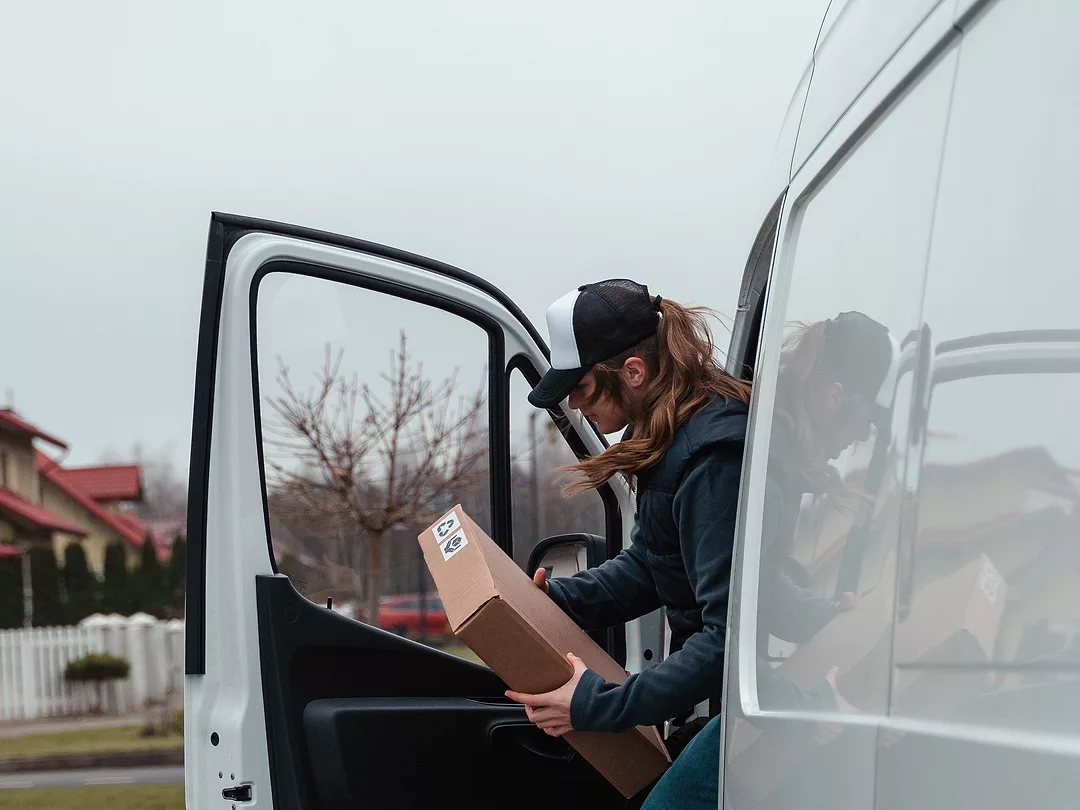
A delivery driver holding a package exits her van. Photo: Pexels.

December 11, 2020
Eden Bryant, SCB Contributor

According to the U.S. Census Bureau, about 3.5 million people in the country work as truck drivers, making up a critically important component of the supply chain. Fleet operators have a duty to keep employees and the public safe by drug-testing drivers. The federal government recognizes this duty, which is why the Department of Transportation regulates drug testing by industry.

DOT’s Federal Motor Carrier Safety Administration (FMCSA) is the agency that regulates carriers and commercial driver's license holders. The FMCSA established urine testing as the mandatory method of testing in 2000. This year, it issued two major updates:

  • Carriers must select drivers at the required rate of 50% of their average number of drivers to test for controlled substances, and 10% for random alcohol testing.
  • Fleet operators must report drivers who violate the substance abuse policy to the Drug and Alcohol Clearinghouse.

Larger carriers have advocated the adoption of hair-sample drug tests as an acceptable testing method (in lieu of or in addition to other testing methods). So far, the issue remains in regulatory limbo, as the agency awaits guidance from the Department of Health and Human Services (HHS). Nevertheless, there are several good reasons for carriers to establish a hair-sample testing program now anyway.

Hair samples present a more complete picture. Urine-sample tests provide a snapshot of recent drug use, detecting the presence of drugs used in the previous week to 10 days. Employees who know a urine test is coming up can simply refrain from drug usage for the weeks preceding the screening in order to provide a clean sample. Hair samples provide an extended history, with a window of 90 days. Urine samples can be a good tool to detect recent usage in a post-incident situation, but for random and pre-employment screening, a hair sample provides a more complete picture.

Another reason to consider hair-sample testing is that there are a number of ways a urine test can be compromised. For example, adulterants can be introduced into a sample. These methods of cheating can be minimized by the collection process, but require special sample collection cups that can detect a bad sample.

There is no known way to cheat a hair sample test. The test works even if someone treats their hair with harsh chemicals, washes their hair just before the test, or applies styling products. A hair sample test is virtually cheat-proof.

Alcohol abuse is rising sharply due to the pandemic, as people react to the stress and isolation of this period. Opioid abuse is also up, according to the American Medical Association. As the holiday season approaches, and home delivery skyrockets, drivers will be under even greater stress. These factors make it even more important for fleet owners to prioritize safety, and implement additional safeguards such as a hair-sample testing regimen.

Following are five tips that help to ensure program success:

  • Make sure the monthly or quarterly testing program is truly random, by using a scientific method to select employees for testing.
  • Ensure that the time of day for testing varies, rather than always conducting tests after work or at another consistent testing time. The time of day should be unpredictable.
  • Outline and consistently use standard processes to conduct the different types of tests used, e.g. urine, hair and saliva testing.
  • Conduct reasonable suspicion testing when there is evidence or reasonable cause to suspect an employee of substance abuse.
  • Test all employees before they’re hired, after accidents, and when returning to duty after an absence.

HHS is expected to issue guidance, recommendations and possibly a mandate on hair-sample testing within the next 18 months. Hair-sample tests are typically more expensive than urine or saliva-sample testing kits, but compared to the price of an accident involving a $70,000 vehicle, investing in a testing regimen that includes hair-sample testing makes good business sense.

Hair-sample testing provides a more complete picture of substance abuse history at a time when abuse is on the rise, and carriers are onboarding new employees. Hair-sample tests are cheat-proof, easy to implement as part of a testing program, and far more affordable than an incident caused by an impaired employee. For all of these reasons, now is a great time to go beyond current requirements and establish a program that includes hair-sample testing.

Eden Bryant is sales operations manager at Confirm BioSciences.

LTL/Truckload Services HR & Labor Management Quality & Metrics Regulation & Compliance Supply Chain Security & Risk Mgmt

RELATED CONTENT

RELATED VIDEOS

Subscribe to our Daily Newsletter!

Timely, incisive articles delivered directly to your inbox.

Featured Product

Popular Stories

  • Businessman using AI agent system on laptop computer.

    AI in Supply Chain Can’t Succeed Without Foundational Systems

    Artificial Intelligence
  • A LARGE CYLINDRICAL OBJECT SHRINK-WRAPPED IN WHITE PLASTIC IS LOWERED BY CRANE ONTO A FLAT BED TRUCK ON A DOCK

    AI Boom Has European Buyers Paying Extra to Secure Gas Turbines

    Technology
  • Close-up hands of unrecognizable man holding and using smartphone standing on city street.

    Five Supply Chain Security Risks Hiding Inside Your Mobile Apps

    Supply Chain Visibility
  • 016_ai_and_data_transformation_in_distribution_v1-(540p).png

    Watch: AI and Data Transformation in Distribution

    Artificial Intelligence
  • DARKENED RACKS IN A WAREHOUSE CLUSTER AROUND A GLOWING ORB

    How to Know If Your Facility Is Ready to Automate

    Supply Chain Finance & Revenue Management

Digital Edition

2026 esg cover main scb q2 2026 cover

SupplyChainBrain 2026 ESG Guide: ESG — The Supply Chain’s Biggest Secret

VIEW THE LATEST ISSUE

Case Studies

  • Recycled Tagging Fasteners: Small Changes Make a Big Impact

  • A GRAPHIC SHOWING MULTIPLE FORMS OF SHIPPING, WITH A HUMAN STANDING AT THE CENTER, TOUCHING A SYMBOLIC MAP OF THE WORLD

    Enhancing High-Value Electronics Shipment Security with Tive's Real-Time Tracking

  • A GRAPHIC OF INTERLACING HONEYCOMBED ELEMENTS REPRESENTING GLOBAL BUSINESS TRANSACTIONS

    Moving Robots Site-to-Site

  • JLL Finds Perfect Warehouse Location, Leading to $15M Grant for Startup

  • Robots Speed Fulfillment to Help Apparel Company Scale for Growth

Visit Our Sponsors

4flow Arkieva Blue Yonder
Carton Cloud CoEnterprise Dassault
Duravant E2Open General Logistics Systems
Hy-Tek iGPS Korber
Lyngsoe Procurability Quinyx
SAP Sikick Systech
S&P Global Mobility TADA TransImpact
US Bank Werner Enterprises WSI
  • More From SCB
    • Featured Content
    • Video Library
    • Think Tank Blog
    • SupplyChainBrain Podcast
    • Whitepapers
    • On-Demand Webinars
    • Upcoming Webinars
  • Digital Offerings
    • Digital Issue
    • Subscribe
    • Manage Email Preferences
    • Newsletters
  • Resources
    • Events Calendar
    • 2026 Event Coverage
    • SCB's Great Supply Chain Partners
    • Supplier Directory
    • Case Study Showcase
    • Supply Chain Innovation Awards
    • 100 Great Partners Form
  • SCB Corporate
    • Advertise on SCB.COM
    • About Us
    • Privacy Policy
    • Contact Us
    • Data Sharing Opt-Out

All content copyright ©2026 Keller International Publishing Corp All rights reserved. No reproduction, transmission or display is permitted without the written permissions of Keller International Publishing Corp

Design, CMS, Hosting & Web Development :: ePublishing