RSS
RSS

The U.S. Federal Reserve implements monetary policy primarily in two ways: the federal funds rate and open market operations. The federal funds rate is the target interest rate set by the Fed at which commercial banks borrow and lend excess reserves to one another overnight. Lower rate targets mean banks pay less to borrow from the Fed, and therefore have more money to lend. This makes capital more affordable, encouraging companies and investors to borrow.
When a manufacturer’s return on invested capital for borrowed capital rises, manufacturers and supply-chain vendors achieve higher liquidity. As a result, they borrow more from banks, which is just like adding money to the money supply.
The challenge for manufacturers, which only becomes worse as inflation takes hold, lies in balancing the cost of money (loans and sales acquisition) with its depreciating purchasing power.
Manufacturers’ sales revenue is computed using the present value of paper money. And while sales revenue may increase, real income (the purchasing power of the sum received by companies) is declining due to increasing quantitative easing (QE) by the Fed, European Central Bank, and most other central banks worldwide. (QE occurs when central banks increase purchases of government bonds or other financial assets, thereby injecting more money into the economy.)
The chart below shows the amount of U.S. currency in circulation as reported by the Federal Reserve Bank of St. Louis, one of 12 regional reserve banks that, along with the Board of Governors in Washington, D.C., make up the Federal Reserve System.
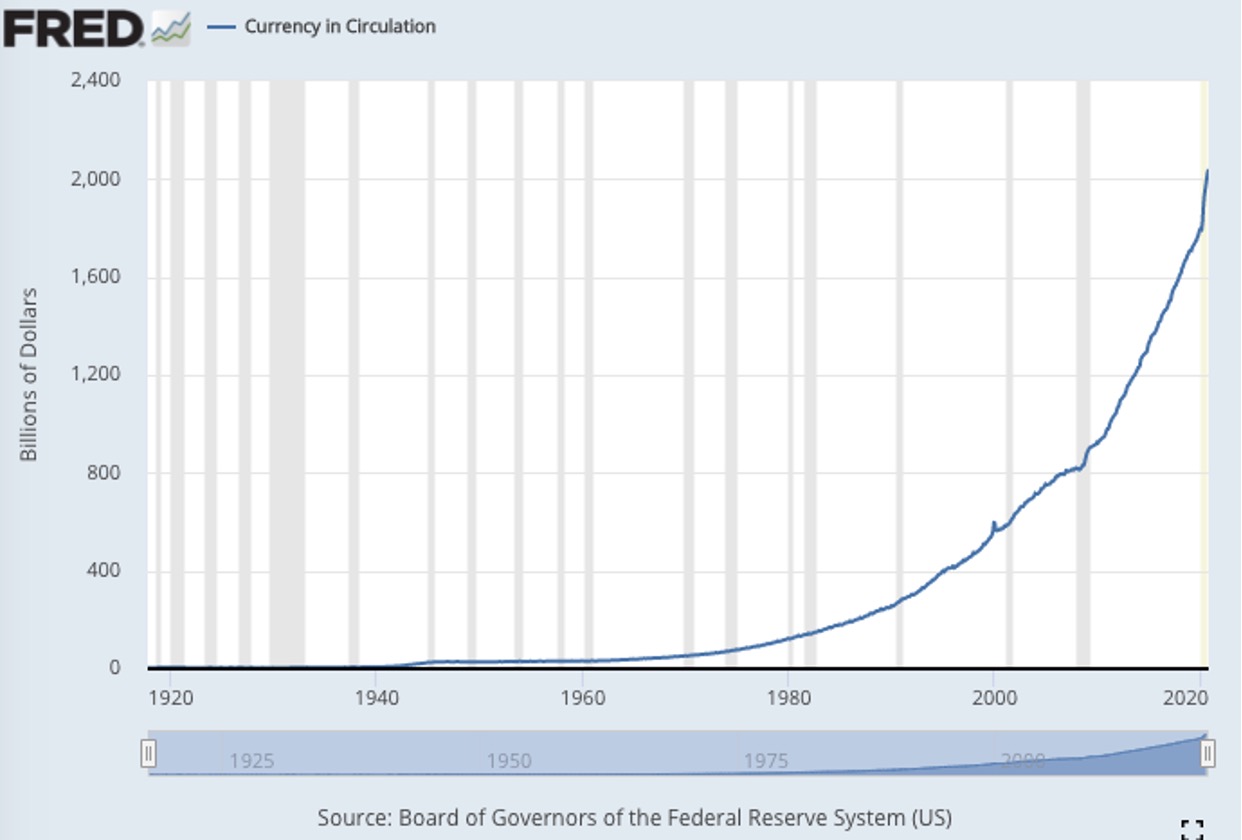
Similar to updating evaluations for market-to-market scenarios, in this instance the true value of company earnings can be hidden behind artificial numbers. Readers might recall the overnight bank lending market in September of 2019, when banks stopped lending to each other. It’s because bank balance sheets are being tabulated with figures that aren't real and can't be properly valued.
U.S. currency debasement (less purchasing power) is shown in the chart below.
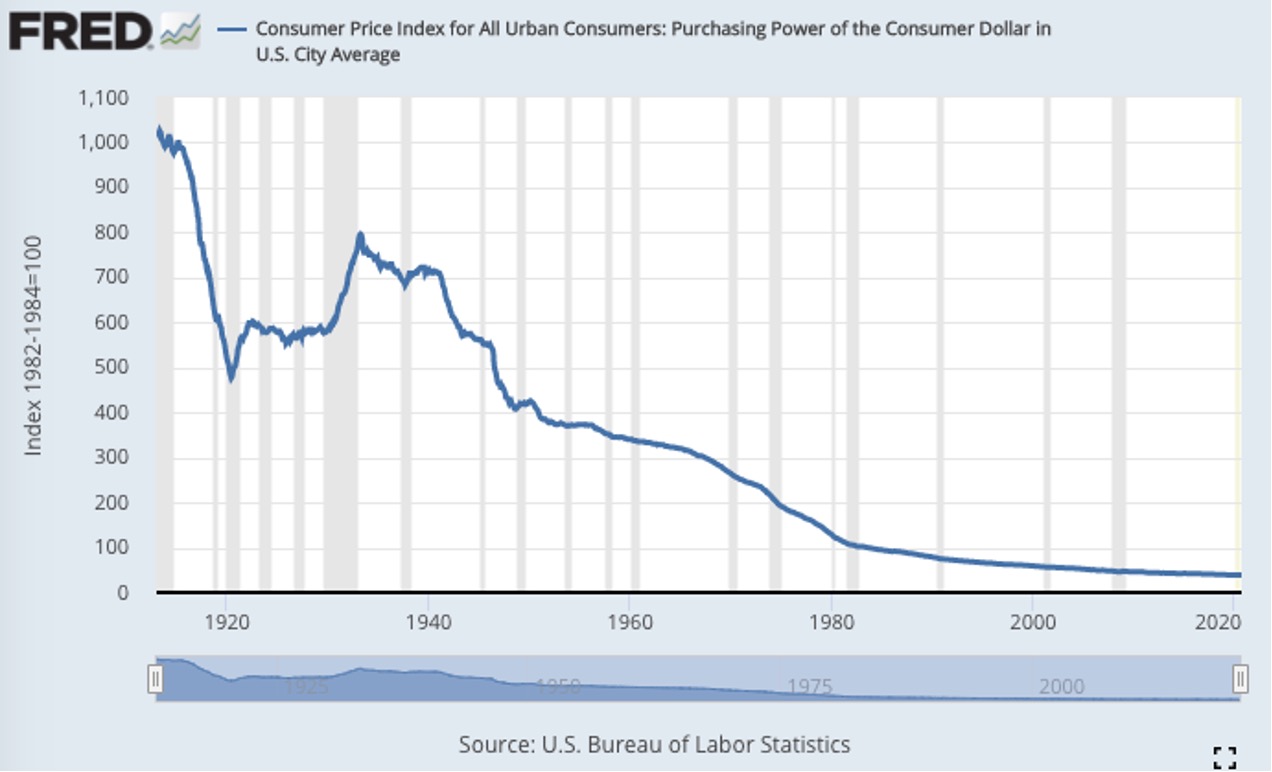
In manufacturing supply chains, the moment a transaction occurs, a financial obligation is created, and the accounting ledger (tax liability) is fixed in figures. Then, in the period of time from when the liability is determined to the point when it’s actually paid, manufacturers and suppliers experience further decreasing leverage with the purchasing power of their cash and reserves.
Accelerating the decrease of manufacturers’ purchasing power will continue into the foreseeable future, so long as the Fed continues to continue with QE policies. No manufacturer or supply-chain vendor or supplier can offset the inevitable inflation and declining purchasing power based on the debasement of U.S. currency. Even foreign operators rely on the value, or exchange rate, of the U.S. dollar because of its current status worldwide.
In Western economies, the European Union is nearing its wit’s end, with the EU bond market owned 66% by the State. This means the European Central Bank’s balance sheet now equals 66% of the Eurozone gross domestic product (GDP).
Add to this, European pensions are on life support, as politicians devise ever-more creative ways to assess new taxes while justifying ways to raise existing ones.
With the U.S. dollar still a global safe haven (for the time being), Europe’s bond market is struggling to survive, and Japan’s is in far worse shape. There’s good reason why two of the most heavily traded currency pairs are EUR/USD and USD/JPY.
The Japanese Central Bank’s balance sheet equals a staggering 136% of Japan’s GDP. In the U.S., the Fed is currently at 37%, which will rise as more credit continues to be created relative to a lower U.S. GDP ratio caused by fewer products being manufactured in the U.S.
In line with the above, more and more European original equipment manufacturers (OEMs) are seeking to reduce costs within their supply chains, including engagements with electronics manufacturing services (EMS) partners.
Worldwide, bubbles created with credit expansion by central banks are becoming re-inflated and growing ever larger.
In the U.S., in just 2020 alone, Fed balance sheet debt added $4 trillion, and the Fed magically produced another $3 trillion, with the strong likelihood of producing trillions of dollars more. The actions reflect Modern Monetary Theory, the belief that governments can “print” as much money as they want without consequence, by creating credit out of thin air. Combined with stagnating wages, this trend further exacerbates angst among buyers and consumers in the U.S. and elsewhere, forcing them to start paying more attention to where and how much they spend.
One thing is certain: all fiat currencies, including the U.S. dollar, British pound, euro, Japanese yen and Aussie dollar, are going to continue to lose purchasing power. At the same time, central banks will find it increasingly difficult to
manage interest rates while they continue to issue credit with increasing paper money circulation.
While the fiat debasement continues, the hunt for taxes to offset negative government balance sheets grows. In one creative solution, a recent Deutsche Bank report by strategist Luke Templeman floats the idea of a 5% work from home (WFH) tax, and calculates that it could raise £7 billion in the UK, €20 billion in Germany and $49 billion per year in the U.S.
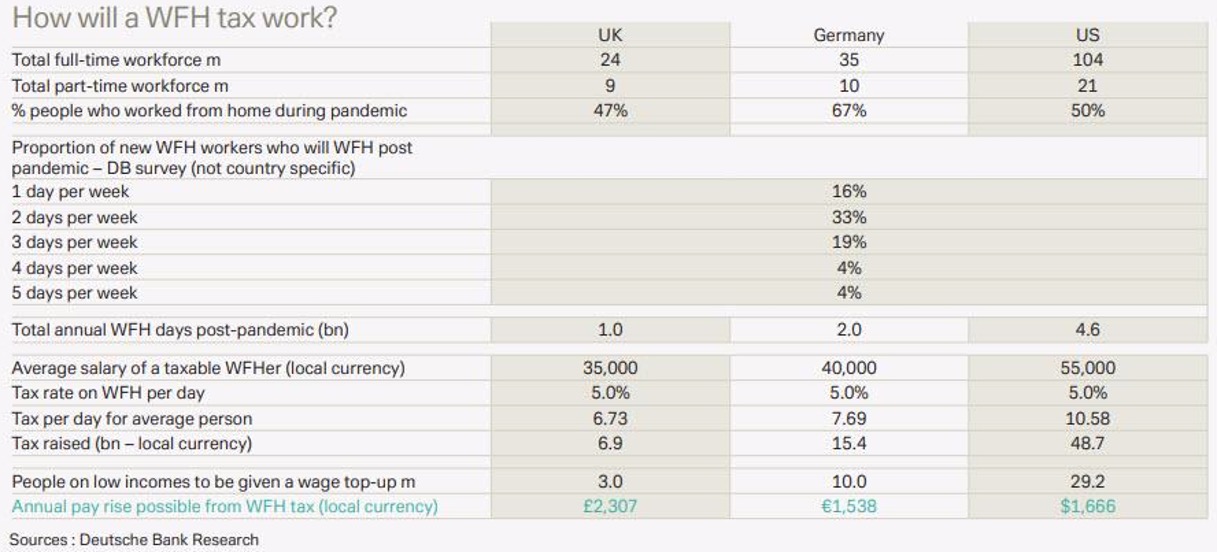
All of this is creating a perfect storm, taking more spending power away from consumers and the manufacturing supply chain, and placing more awareness on corporate spend.
Rising Supply-Chain and Consumer Costs
As inflation eventually takes hold, every manufacturer, vendor, supplier and buyer will face higher costs with a further decline in purchasing power, made worse by rising interest rates. As prices rise, this will place greater impact on the manufacturing export trade, which will force even an greater focus on manufacturing compliance policies and procedures, especially in areas of managing commodities and inventories.
Manufacturers’ finances will come under further scrutiny. With the debasing of fiat currencies happening everywhere, how will manufacturers calculate depreciation in order to determine real versus apparent income? Manufacturing is already one of the most common sectors having to re-assess inventory values. OEMs with networked EMS supply chains face even more pronounced challenges regarding manufacturing financial restatements.
Sourcing and procurement cost management, covering raw materials and components for electronics and electro-mechanical products, will face increasing scrutiny by manufacturing finance executives, making it more difficult to achieve quarterly financial numbers.
In frequent conversations, manufacturers are asking questions and paying more attention to the need for gaining greater control over material-planning and supply-chain execution. A more concerted and disciplined approach is apparent in every aspect of the supply chain, especially inventory and related product changes, as manufacturers weigh costs tied to introducing new products versus revising existing ones with product change notices (PCNs). A robust PCN platform gives manufacturers the ability to continuously update and prioritize changes to electronics and electro-mechanical products, flag potential risks and disruptions to manufacturing programs, and acquire deeper and earlier inventory insights. In the process, they can capture more revenue, stop expensive production shutdowns, and avoid costly inventory and materials write-downs.
Better PCN procedures will help manufacturers identify and clarify country-of-origin and U.N. Standard Products and Services (UNSPS) codes. They’ll improve the ability to manage disputes, as governments seek new ways to assess and capture export trade taxes, as well as address growing pension liabilities. The tool can also help position smart manufacturers with more accurate Harmonized Tariff System (HTS) codes across their supply chains, avoiding customs delays and costly penalties.
OEM sourcing services from EMS providers lead to a better understanding of internal EMS factory costs versus quoted pricing. By drawing on intelligence about EMS internal operations and hidden costs, OEMs can reduce material spend and EMS profit markup, achieve a more favorable total landed cost, and optimize cash conversion.
Using comprehensive manufacturing cost models, OEMs can account for foreign exchange rates; direct labor liabilities; loaded indirect labor costs; selling, general and administrative expense, and thousands of other calculations impacting OEM global manufacturing supply chains, with the potential for cutting costs by between 5% and 15% per OEM-EMS program.
Material Spend Cash Conversion
The value of a business is the present value of cash that it generates over its lifetime. In contract manufacturing, the value of the OEM customer relationship is equal to the revenue that EMS manufacturers earn from the OEM customer over the life of the relationship.
But manufacturing supply chains are dynamic and fickle. This creates constant challenges for every commodity buyer, planner and supply-chain manager.
COVID-19 has added to manufacturing complexity. Executives tell of having to roll back programs for achieving the Industry 4.0 model by two to three years as a result of the pandemic. For some manufacturers, the fallout has left them with as much as $50 million in payroll costs that were previously earmarked for acquisition of hosted software. Projects are being re-examined, re-prioritized, pushed out and even cancelled.
For all manufacturers, COVID-19 is causing a hard reboot of how their supply chains are managed. The reality for nearly every manufacturer I’ve spoken with includes the need to establish new baseline expenses and tighter cash control.
Thanks to a combination of changes to monetary policy by central banks and the pandemic, we find ourselves in a new era of supply-chain management, and we need new tools to solve the Industry 4.0 challenges ahead. Meanwhile, there’s a good chance that many companies will default on their corporate debts, as the number of “zombie companies” — those lacking enough revenue to repay principal on loans — grows.
Manufacturers need to keep their pencils sharp, practice sound business practices, and utilize the right information and tools if they are to weather the current economic climate, and address the financial challenges of the years ahead.
Mark Zetter is founder of VentureOutsource.com, a networking community for OEM peers selecting and managing EMS providers.
.webp?height=100&t=1781237049&width=150 "016_ai_and_data_transformation_in_distribution_v1-(540p).png")