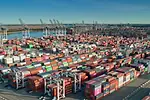
How The Right Insurance Can Help Protect Your Supply Chain

Likewise, flooding in Thailand from July 2011 until January 2012 closed down dozens of hard drive manufacturing and supply plants, interrupting, for example, computer supply chains to the tune of $40bn. Closer to home, last fall Superstorm Sandy caused power outages and slowed trade throughout the Northeast, and elsewhere billions in business interruption losses.
Not all business interruptions are the result of natural disasters, however. In December 2012, the International Longshoremen's Association threatened a strike that would have shut down ports all along the American East and Gulf Coasts, from Maine to Texas. The federal sequester cuts that went into effect in April are projected to exacerbate understaffing in customs and border protection, creating bottlenecks at ports nationwide, again with potential devastating supply chain impacts. Cyber attacks also are a significant risk for business, making major headlines when hackers disrupted online services by Bank of America, JP Morgan Chase, and Wells Fargo during a single two-week span.
These recent world events have brought to the forefront the often fragile nature of the supply chains on which companies rely to manufacture goods and provide services, and deliver them to consumers. If your company relies on other businesses to do business, it is susceptible to a supply chain problem. While many companies enter into indemnity and other agreements with business partners in an effort to mitigate against this risk, this is not enough.
In a global economy where one weak link in the supply chain can bring business to a screeching halt, businesses should re-examine their insurance portfolio to determine whether their existing policies adequately protect against supply chain risks, and whether additional coverages should be purchased.
First-Party Commercial Property Insurance
More likely than not, your company's portfolio contains first-party commercial property coverage, which includes business interruption coverage. Such insurance typically reimburses the insured company for the profits that it would have earned had it not suffered an interruption in its business. From a supply chain disruption perspective, the contingent business interruption provision may be the most relevant coverage within these policies. This coverage pays for lost profits resulting from a break in the supply chain often due to a physical event impacting a company's customers or suppliers. The impacted insured need not suffer any actual loss or damage at its own facility to trigger coverage. The critical nature of this coverage came to the forefront for companies worldwide after the Japan earthquake, when, for example, manufacturers were unable to receive auto parts from Japanese suppliers following the tsunami. Companies also experienced loss after the 2011 Thai floods when they could not access computer chips or other component parts from Thai suppliers. Since those events, and certainly in the wake of Superstorm Sandy, insurers have sought to narrow the available coverage. In some instances, the policies only cover losses due to disruptions at the facility of a "direct" supplier or customer. In other instances, when the coverage is not so limited, insurers have regardless sought to impose a narrow interpretation. At least one court recently has rejected such an approach, concluding that the term "supplier" was ambiguous and ruling in favor of coverage even though the loss event that resulted in ultimate impacted profits for the insured took place at a supplier further down the supply chain. Thus, companies should carefully review their policies to determine the extent of available coverage for potentially relevant supply chain disruptions and at renewal seek to negotiate to obtain policy language to provides maximum protection.
Cargo Insurance
Marine Cargo Insurance covers the loss, damage or theft of goods while in transit. Losses during transport occur regularly. Containers may shift in transit, transport vessels may capsize, transport containers may be damaged or destroyed or weather may harm goods and interrupt travel. Theft also can be a major risk for supply chains. For example, theft as a result of organized crime is estimated to cause over $30bn in losses a year. All of these situations can compromise the safety of goods traveling domestically and internationally. Cargo insurance protects goods on ships, at airport terminals, on trains"”essentially at any time when the goods are being transported between their points of origin and their final destination.
Trade Disruption Insurance
From a supply chain risk-management perspective, contingent business interruption and cargo insurance may not be enough"”it may provide adequate protection if a supplier or customer cannot provide or accept goods due to a natural disaster or other loss event at its facilities. However, depending upon the policy language at issue, that coverage may do little to protect against supply chain disruptions caused by, for example, a workers' strike at a port or location in a foreign country, or another event that impacts the supply chain that did not involve any physical damage.
Trade disruption insurance may provide important protection in these circumstances. That coverage is designed to protect against, among other things, lost profits caused by disruption in the supply chain where there is no physical loss or damage to the insured's, or its supplier's, assets. This coverage often fills gaps in coverage left open by other coverages such as business interruption or cargo/marine insurance. However, it is important to pay close attention to the policy language provided. Some policies provide cover for political events, such as an embargo or terrorism, while many others do not. Similarly, some policies provide coverage for commercial events, such as strikes or the bankruptcy of a key supplier, while others may not. These policies are specialty coverage, and can often be tailored to the needs of a particular business.
Cyber Insurance
When risk managers consider supply chain risks, what often comes to mind is the physical supply chain. However, a growing number of IT-related cyber threats could cause even more serious damage to supply chains than physical threats. With revelations of recent cyber attacks against major American banks and news outlets, internet-based services and federal agencies, companies have understandably become more concerned with protecting against the damage that can arise when companies lose control of customer information.
Given the growing technological sophistication of supply chains and the globalization of companies' information systems' infrastructure, supply chains are at an increasing risk of cyber attacks. One way of mitigating against that risk is cyber insurance. When purchasing cyber coverage, however, it is important to review the policy language to ensure coverage not only for cyber attacks against the insured company but also against its suppliers as well.
Conclusion
Given recent current events that have exposed vulnerabilities in global supply chains, companies will want to review and assess the insurance policies in their portfolios with the help of knowledgeable insurance counsel and consider purchasing additional coverage if necessary.
Source: Jenner & Block
Keywords: international trade, logistics services, logistics management, third party logistics, 3PL, global logistics, logistics and supply chain, supply chain risk management, transportation management, Supply Chain Management: Supply Chain Security & Risk Mgmt., Linda Kornfeld, Attorney at Law, Jenner & Block
Popular Stories




100 Great Supply Chain Partners 2026: The Secret to Supply Chain Success
VIEW THE LATEST ISSUECase Studies


Visit Our Sponsors |
|
|
|
|
|
|
|
|
|
|
|
|
|
|
|
|
|
|
|
|
|
|
|
|
|
|
|
|
|
|
|
|
|
|
|
|
|
|
|
|
|
|
|
|
|
|
|
|
|
|
|