.webp?height=100&t=1783959879&width=150 "014_how_ai_is_transforming_the_transportation_back_office_v1-(540p).jpg")
Japan’s Takaichi Urges Passage of Vessels in Call With Iran
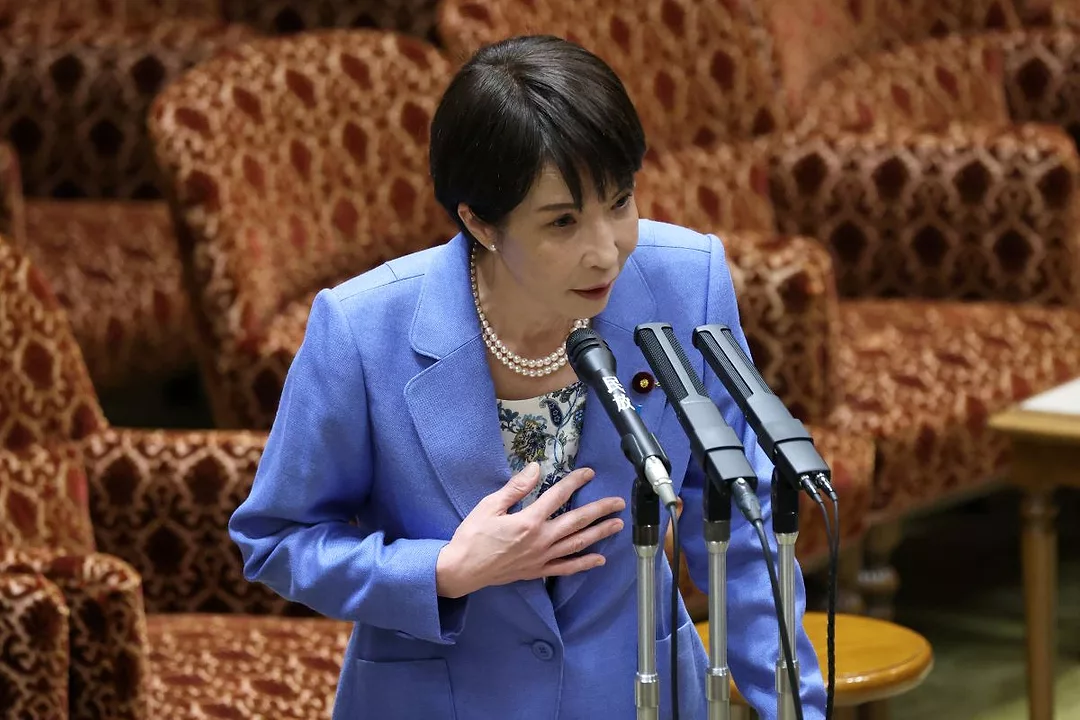
Sanae Takaichi Photographer: Kiyoshi Ota/Bloomberg
Japanese Prime Minister Sanae Takaichi called for the safe passage of all vessels regardless of nation in her third phone call with Iranian President Masoud Pezeshkian.
“I once again strongly urged that all vessels — including those of Japan and other Asian countries — be allowed to pass through the Strait of Hormuz freely and safely as soon as possible,” Takaichi told reporters after her 15-minute call with Pezeshkian on June 1.
In the call with Pezeshkian, Takaichi reiterated Japan’s position that it’s crucial for the situation to be de-escalated through dialogue. “I expressed my hopes that Iran would continue to demonstrate the utmost flexibility to achieve an agreement as quickly as possible,” she said.
The call came as U.S. President Donald Trump said negotiations were advancing with the two sides near to reaching a deal. He suggested to ABC News that the deal could be reached over the next week, but Iran has disputed reports that an interim deal was close.
Pezeshkian said in the call his country will ensure that Japanese ships pass through the Strait of Hormuz with “greater ease and without problems” according to a post on X seen by Bloomberg.
He added that the main problem arises from the restrictions and obstacles imposed by the U.S. against Iran’s shipping and trade. The post was not available on the morning of June 2, and it was not immediately clear whether it had been deleted.
Japanese Chief Cabinet Secretary Minoru Kihara said that the phone conversation with Iran had happened at a critical juncture for U.S.-Iran talks.
“We will continue to support the diplomatic efforts of intermediary countries, and persistently continue our own diplomacy to the best of our efforts, in close cooperation with other countries towards a swift agreement between Iran and the U.S.,” Kihara said at a regular news briefing on the morning of June 2.
Resource-poor Japan is highly dependent on the Middle East to source its oil. The longer the crisis in the Middle East continues, the larger the impact on Japan’s economy is likely to be.
Supertankers
Japanese shipowners are typically conservative, and few Japan-linked vessels have passed through the Strait of Hormuz since Tehran effectively closed off the waterway after U.S. and Israeli strikes on Iran began at the end of February.
Mitsui O.S.K. Lines Ltd., one of the world’s largest oil and gas tanker owners, was among shipowners that have indirectly requested support from Tokyo to get their vessels out, Takeshi Hashimoto, chairman of the company’s board, said on the sidelines of the TradeWinds Shipowners Forum in Athens on June 2.
“She could manage to rescue some of our tankers,” Hashimoto said. “Every government is trying to support the evacuation process — the Indian government, the Pakistani government, the Chinese government.”
An empty liquefied natural gas tanker crossed the strait in early April. The Idemitsu Maru became the first Japanese very large crude carrier to make the journey later that month. Supertanker Eneos Endeavor made a rare, dark transit through the waterway in May.
At that time, Takaichi said in a social media post that there were still 39 Japanese affiliated ships in the Persian Gulf, one with Japanese crew members.
Already, Takaichi has had to call for an extra budget to fund the government’s response. Energy usage over the coming hot summer months, and how to reduce its cost, have become top-priority concerns for the government and the broader public.
The government is set to use about $3.2 billion from a reserve fund for this year’s annual budget to finance utility subsidies. The extra budget will help top up that fund as it runs low.
Popular Stories

.webp?height=100&t=1783656185&width=150 "017_turning_disruption_into_opportunity_v1-(540p).png")


SupplyChainBrain 2026 ESG Guide: ESG — The Supply Chain’s Biggest Secret
VIEW THE LATEST ISSUECase Studies


Visit Our Sponsors |