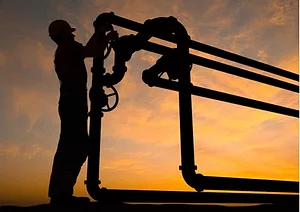
If you ask the manufacturing and chemical sectors what their greatest blessing has been in recent years, the answer will generally be the plethora of natural gas that has been made accessible to them - and how this has decreased their cost of doing of business.
Hidden within the salt flats high in the Andes mountains of South America are vast deposits of the lithium that Elon Musk may need for his electric-car revolution. But extracting the mineral from brine ponds created by Orocobre Ltd. has proved more difficult than expected.
Herbie Mays is 3M proud, and it shows - in the 3M shirt he wears; in the 3M ring he earned after three decades at the company's plant in suburban Cincinnati; in the way he shows off a card from a 3M supervisor, praising Mays as "a GREAT employee." But it's all nostalgia.
It was the late 1990s, and entrepreneurs Steven Abramson and Sidney Rosenblatt were pitching an electronics giant on their new flat-screen technology. It didn't go well.
Entire industries, from textiles to toys, have become almost extinct in the U.S. as manufacturers moved abroad in search of lower costs or got swept away by a wave of imports.
As populations grow and emerging markets industrialize, companies are facing a serious long-term challenge: how to meet surging consumer demand while minimizing environmental damage and sustaining the planet's natural resources.
A June cyberattack that snarled shipping terminal operations worldwide - and briefly shut down the Port of Los Angeles' largest cargo terminal - has cost the Danish shipping giant A.P. Moller-Maersk $200m to $300m, the company says.
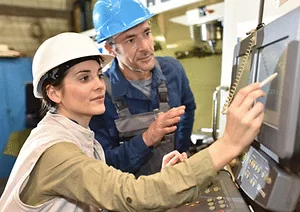
Manufacturing workers are retiring in droves, with an estimated 2.7 million jobs being vacated by 2025. At the same time, the growth and advancement of the industry is expected to create an additional 700,000 jobs for skilled manufacturing employees over the next decade. As a result, manufacturers are scrambling to fill this knowledge and skills deficit with the next generation of workers - millennials.