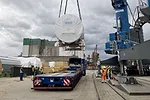
The growth of U.S. exports, especially to countries such as China, has put a spotlight on the need for strategic inland ports across the United States, according to Jones Lang LaSalle. Inland ports, which traditionally focus on moving and handling imports, are also facilitating the effective movement of goods outside the U.S.
Considering the astonishing growth of China's economy over the past decade, it should come as no surprise that 73 Chinese companies showed up on this year's Fortune Global 500. That's up from 11 just ten years ago, but given that fact that the nation saw average annual GDP growth of 9.91 percent between 1979 and 2010, and is now the world's second largest economy, one might ask why more Chinese companies aren't on Fortune's list.
Why is it that the same retailers who will replace a finance clerk's desktop like clockwork every four years will let their POS linger for eight, nine, 10 or more years? Why is it that data centers can be consolidated and servers can be virtualized but e-commerce still operates as a separate channel? The answer is simple: politics.
Synchronet Intermodal Services Inc. (SIS) has expanded its North American street-turn service to include both beneficial cargo owners (BCOs) and non-vessel operating common carriers (NVOs).
Truckload pricing remained constant from July to August according to the Cass Truckload Linehaul Index, which for the second month in a row registered a value of 109.5. On a year-over-year basis, truckload rates are up 1.0 percent. After seeing substantial year-over-year growth rates last year and early in 2012, truckload pricing has continued to see its rate of growth move down over the last few months, according to Avondale Partners' recent report.