One risks wasting huge sums by exploring supply chain solutions before identifying one's supply chain needs, says Steve Hopper, founder and principal of Inviscid Consulting.
Bill Brooks, vice president of North America transportation with Capgemini, delves into the multiple causes of the congestion that’s currently plaguing global supply chains, and speculates on some possible short- and long-term solutions to the crisis.
Supply-chain efficiency depends heavily on the connection between the quote-to-cash and procure-to-pay processes, says Ash Abhyankar, servant leader at Conexiom.
Mike Jette, vice president of consulting with GEP, defines the term “Collaboration 2.0,” and explains how it differs from earlier concepts of supply chain collaboration.
Howard Meitiner, managing director with Carl Marks Advisors, explains why the current congestion and challenges being experienced by retail supply chains aren’t going away anytime soon — in fact, they’re likely to permanently change the sector.
By its very nature, the supply chain is especially vulnerable to cyber attack, says Zac Rogers, assistant professor of supply chain management at Colorado State University.
Kayne McGladrey, senior member of IEEE, offers valuable tips on how supply chains can shore up their cybersecurity at a time when threats from hackers are greater than ever.
In the time of COVID-19, the already challenging consumer world is seeing expectations heightening, says Tom Goldsby, Haslam Chair of Logistics at the University of Tennessee.
Raul Alfonso, chief commercial officer with Port Tampa Bay, discusses how the pandemic and surge in consumer buying have motivated international shippers to seek alternative gateways, in order to avoid congestion at major port complexes.
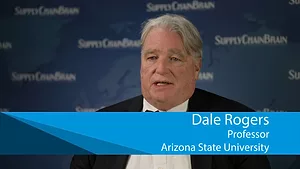
An increasing number of organizations are relying on their supply chains to fund operations, says Dale Rogers, On Semiconductor professor of business at Arizona State University, but what is the effect on suppliers?