RSS
RSS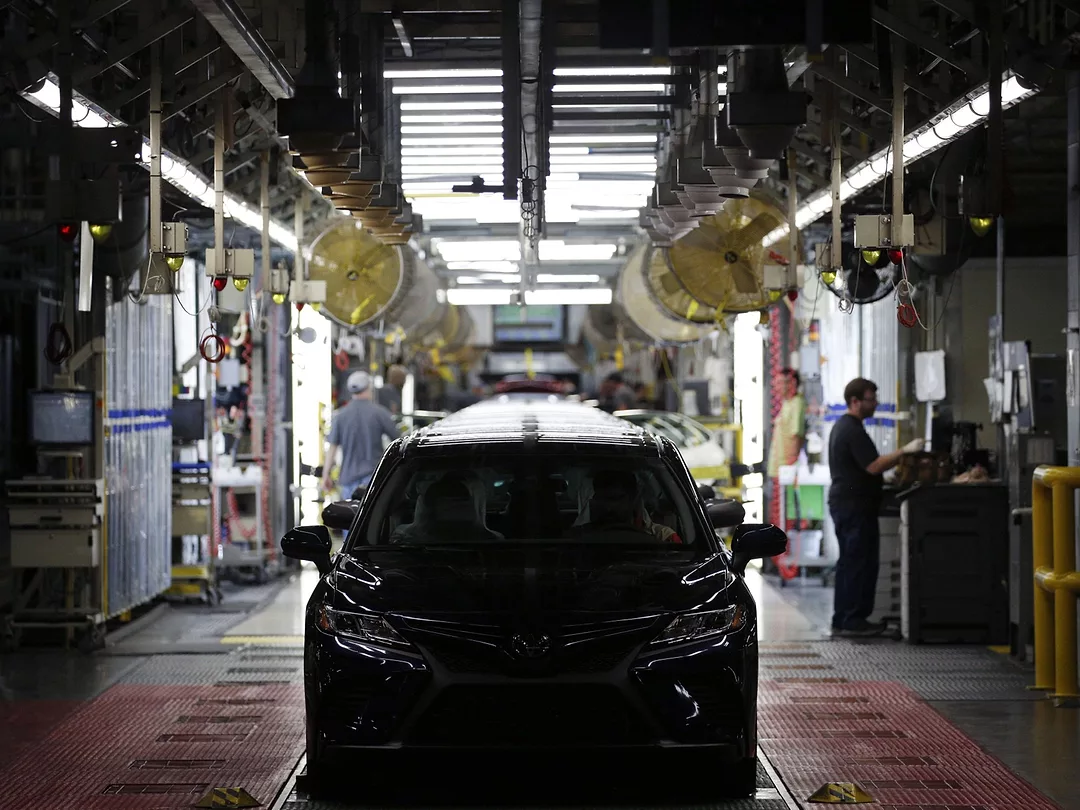

The vulnerability of complex global supply chains, built over decades of globalization, has been exposed by COVID-19 and geopolitical shocks.
Take the global automotive industry. Southeast Asia is neither the largest consumer market for automobiles nor a major provider of core components and technologies. Yet the region has become a strategic hub for some auto giants due to its concentration of certain non-core components and chip packaging. As a result, the spread of the Delta variant of COVID-19 in August left Southeast Asia's automotive supply chain vulnerable to severe external disruptions.
In early August, a single worker at a huge factory in Vietnam that makes cable harnesses for Toyota vehicles tested positive for COVID-19. Local authorities immediately suspended operations at the parts maker's factories. Toyota's inventory subsequently dwindled as the factory's infection disrupted operations.
Since July, Toyota has been conducting daily inspections of various suppliers in Southeast Asia to assess the severity of the situation. Nevertheless, it was seriously affected by an inability to obtain key parts, including cable harnesses from Vietnam and chips from Malaysia. In September, the world's largest automaker shocked the market by announcing a 40% cut in vehicle production.
Toyota said its biggest concern was whether its operations in Southeast Asia could continue. The lockdown, rising cases of infections, and production restrictions introduced by the government, particularly in Malaysia and Vietnam, are threatening the automaker’s ability to maintain operations.
The problems aren’t confined to that part of the world. Automakers the world over are seeing revenues drop as parts shortages impact production. India's largest producer, Maruti Suzuki India Ltd., said sales in September could fall to about 40% of normal levels. Tata Motors Ltd. said on September 1 that recent lockdown measures in East Asia had worsened the supply situation. China's NIO is struggling with parts supplies from its Malaysian partner. In Japan, Suzuki Motor Corp. said it would cut vehicle production by 20% in September. And in Europe, Renault is preparing to shut down assembly plants in Spain for up to 61 days by the end of the year.
The global automobile industry is facing supply chain shocks, and industries such as semiconductors and consumer electronics are feeling the effects to varying degrees. It’s clear that the more globalized industries are, the more dependent they are on the health of extended supply chains. We believe that as the pandemic continues, the impact on global supply chains will deepen. The dilemma is noteworthy for the following reasons.
First, the impact of the external supply chain will change the characteristics of concentrated production centers and low-profit competition in the industry. A major goal of global industries has been to reduce production costs and improve efficiency through the formation of regional production centers. The automotive industry, for example, which has an extended industrial chain, has long been subject to low profit margins, and remains so after decades of efforts to keep costs down.
Over the past decade, Japanese automakers have invested heavily in Southeast Asia, eyeing the region's cheap labor and ability to complement their Chinese operations as trade frictions between the U.S. and China heat up. Suppliers working with Toyota alone have more than 400 plants in Malaysia and Vietnam. This centralized approach worked well for many years, but quickly failed when the pandemic hit. In the future, the model of regional production centers for mass production and cost reduction may need to be adjusted.
Second, the supply side will get a bigger say. The global industrial chain is facing increasingly severe supply constraints. Take the situation with automotive semiconductors. International auto giants such as Volkswagen, Ford, General Motors, Renault and Honda, and Chinese auto companies such as Chang'an Automobile, are troubled by the chip shortage. Even Tesla, which relies heavily on its own chips, shut down its factory in Fremont, California for a time because of the chip shortage.
In the global auto parts supply and demand chain, some important components producers rely mainly on a handful of companies such as Bosch, Continental, and ZF, while semiconductor chips are mostly controlled by Infineon Technologies, NXP, Samsung, Renesas Electronics and a few other manufacturers. This means that suppliers of key components will have a bigger say, and that the past pattern of the market being controlled by the demand side will have to be at least partially reversed.
Third, price increases on the supply side may become a trend, which will increase inflationary pressure on the market as a whole. In times of tight supply, chip manufacturers take the initiative, and the upstream industry chain takes the opportunity to raise prices.
According to Anbound’s tracking research, some semiconductor chip makers have started to push for price increases, citing rising raw material costs and longer production cycles. Suppliers such as NXP, Renesas Electronics and Toshiba have raised prices specifically for auto chips.
Fourth, global logistics difficulties will increase total supply chain costs, which are already rising rapidly as a result of the pandemic. From the beginning of 2020 to August, 2021, the cost of shipping a container from Ningbo port to the U.S. has increased by more than eightfold, from $3,000 to $26,000. The typical market price for shipping a standard 40-foot container from China to Europe was between $4,000 and $8,000 in 2020, rising to $6,000 to $12,000 in 2021.
The vast majority of goods exported from China to Europe and the U.S. consists of clothing, home appliances and some simple machinery. A typical container full of goods is worth about $40,000. An increase in the shipping cost from $3,000 to more than $20,000 means that expense rises from around 8% of the total value of goods to 60% or more.
As a result, some retailers have been forced to opt for alternatives to ocean shipping, and air freight, once considered too expensive, is now an option. There are even logistics companies that choose to use passenger flights to deliver goods. The global average price for air cargo flights in August was $3.39 a kilogram, up 6% from January and 14% from a year earlier. Freight prices from Southeast Asia to the U.S. have risen 24% in the past year to $7.66 a kilogram.
Fifth, the restructuring of global supply chains is likely to continue. For many global enterprises, the main lesson of supply chain shocks caused by COVID-19 is not to concentrate production and parts supply too much on a single source, and to maintain at least two or three important supply chain sources. In the months and years ahead, enterprises will change their zero-inventory strategy, and maintaining proper inventory levels will become the industry norm. In Toyota's case, the challenge now is to secure alternative supplies of parts and make up for lost production in time to meet global demand for vehicles as inventories shrink.
The pandemic ended up shaking one of the world's best-maintained supply chains. The underlying question for enterprises is: Will the auto industry continue to follow the business strategy of putting efficiency first and keeping minimum inventory after the pandemic? It now looks as though enterprises will have to adjust to keeping supply chains in high visibility, maintaining some stocks of "risky” components such as semiconductors.
The COVID-19 pandemic has severely impacted global supply chains. As the pandemic continues, the global supply chains of multiple industries will undergo a long-term transformation, and the short-term shocks to supply chains will become irreversible long-term structural changes.
Chan Kung is founder, and He Jun is partner, director of the China macroeconomic research team and senior researcher, at Anbound Think Tank.