
• Advertise
  • Contact Us
  • Supplier Directory
  • SCB YouTube
  • About Us
  • Login
  • Subscribe
  • Logout
  • My Profile
  • LOGISTICS
    • Air Cargo
    • All Logistics
    • Facility Location Planning
    • Freight Forwarding/Customs Brokerage
    • Global Gateways
    • Global Logistics
    • Last Mile Delivery
    • Logistics Outsourcing
    • LTL/Truckload Services
    • Ocean Transportation
    • Parcel & Express
    • Rail & Intermodal
    • Reverse Logistics
    • Service Parts Management
    • Transportation & Distribution
  • TECHNOLOGY
    • All Technology
    • Artificial Intelligence
    • Cloud & On-Demand Systems
    • Data Management (Big Data/IoT/Blockchain)
    • ERP & Enterprise Systems
    • Forecasting & Demand Planning
    • Global Trade Management
    • Inventory Planning/ Optimization
    • Product Lifecycle Management
    • Robotics
    • Sales & Operations Planning
    • SC Finance & Revenue Management
    • SC Planning & Optimization
    • Supply Chain Visibility
    • Transportation Management
  • GENERAL SCM
    • Business Strategy Alignment
    • Customer Relationship Management
    • Education & Professional Development
    • Global Supply Chain Management
    • Global Trade & Economics
    • Green Energy
    • HR & Labor Management
    • Quality & Metrics
    • Regulation & Compliance
    • Sourcing/Procurement/SRM
    • SC Security & Risk Mgmt
    • Supply Chains in Crisis
    • Sustainability & Corporate Social Responsibility
  • WAREHOUSING
    • All Warehouse Services
    • Conveyors & Sortation
    • Lift Trucks & AGVs
    • Order Management & Fulfillment
    • Packaging
    • RFID, Barcode, Mobility & Voice
    • Warehouse Automation
    • Warehouse Management Systems
  • INDUSTRIES
    • Aerospace & Defense
    • Apparel
    • Automotive
    • Chemicals & Energy
    • Consumer Packaged Goods
    • E-Commerce/Omni-Channel
    • Food & Beverage
    • Healthcare
    • High-Tech/Electronics
    • Industrial Manufacturing
    • Pharmaceutical/Biotech
    • Retail
  • THINK TANK
  • WEBINARS
    • On-Demand Webinars
    • Upcoming Webinars
    • Webinar Library
  • PODCASTS
  • WHITEPAPERS
  • VIDEOS
Home » Blogs » Think Tank » A Modern Approach to DC Equipment Life-Cycle Management

Think Tank
Think Tank RSS FeedRSS

A Modern Approach to DC Equipment Life-Cycle Management

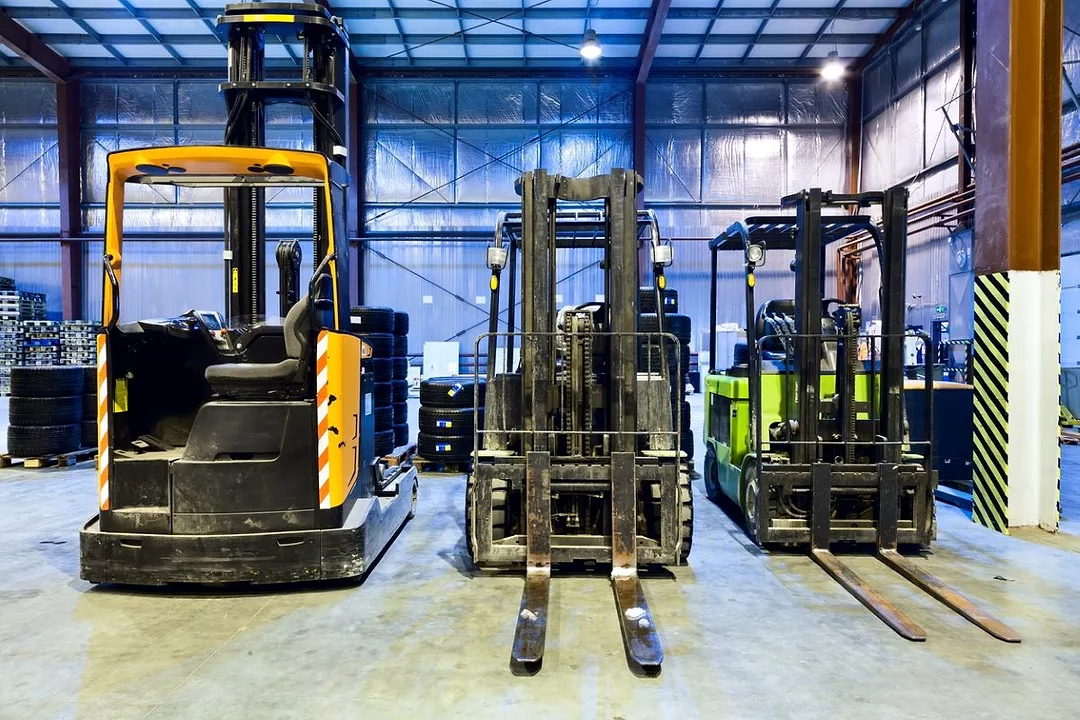
THREE FORKLIFTS SIT ON THE FLOOR OF A WAREHOUSE

Photo: iStock.com/maxoidos

November 29, 2022
Kathie Canning, SCB Contributor

Distribution centers (DCs) traditionally have taken a react-and-respond approach to equipment life-cycle management. That strategy incorporates regularly scheduled maintenance, as well as reactive maintenance when a problem occurs.

The approach is far from perfect, even under “normal” operating conditions, says Diane Blair, lifecycle support services global leader for Honeywell Intelligrated. For one thing, the window available for scheduled equipment maintenance tends to shift and shrink, thanks to ongoing needs for non-equipment-related facilities maintenance, unplanned operations labor adjustments, and other reasons.

“You really end up kind of chunking those preventive maintenance tasks,” she says. “It adds additional work to the maintenance team to visit the same piece of equipment three or four times. And sometimes you don’t get to it at all, so you’re really just running on a wing and a prayer.”

When a major inventory-related supply chain disruption enters the picture, the traditional approach to equipment life-cycle management can be even less effective. Many DCs in the retail and e-commerce sectors likely found that out during the height of the COVID-19 pandemic.

“It quickly became an e-commerce world,” Blair says. “You had to respond to that customer need very quickly, especially because the brick-and-mortar stores had shortages. There was a lot of panic buying; there was a lot of finding stuff anywhere you could find it.”

To meet demand, DCs had to shift quickly. And new construction often was cost prohibitive. So DC workers — and equipment — had to be able to run 24/7, Blair says. The time normally allotted to routine equipment maintenance suddenly disappeared.

“Unless you have brand-new equipment out there — and even that still needs maintaining — you’re going to find yourself in a predicament where you don’t have the equipment availability you need to meet demand,” she says.

That reality started a shift on the part of the industry to a more modern approach to equipment life-cycle management — one that’s based on analysis and prediction, Blair says.

A move to that model typically requires DCs to install sensors to monitor the condition of equipment assets. That real-time data from the sensors then can be used to predict when a particular piece of equipment will need maintenance.

Such an approach could also help DCs address the current shortage of highly technical workers, including skilled maintenance personnel, Blair says.

“Once you can adopt and really validate the data-driven method, that allows you to reduce some of your staffing requirements across the board,” she says.

A ‘Shift in Paradigm’

For many distribution operators, the move from a react-and-respond approach to an analyze-and-predict model won’t be easy. It’s a “big shift in paradigm,” Blair says. The maintenance and operations teams — at both the DC level and above — not only must adopt the approach, but also must trust the data coming out of it. They’ll need to track the data on all levels to prove their theories and prove the data to be correct

“There’s give and take there,” she says. “You have to say, ‘OK, we’re going to schedule this maintenance because this is what the data is telling us.’ Then you have to be able to stand behind that and say, ‘You know, for the last 72 days, we haven’t had any issues with this piece of equipment.’”

The teams also have to understand that the modern model is by no means foolproof. At times, the DC still will have equipment challenges tied to emergency access and availability of 100% of the equipment, Blair says.

“Then it’s really getting them to understand the different KPIs that you’re running through the system,” she says. “And how they can clean up their operational act to really get the efficiency out of the equipment once they start making the maintenance portion more efficient.”

More predictability needed

Implementation might not be easy, but, looking ahead, Blair sees a continued need to move in that direction.

The move to more predictability will require a more connected world — and a shift in mindset for many DCs. Although they rely on demand data from customers, DCs are not always on the “forward edge” of data-driven technology when it comes to operations within their own four walls, Blair says.

“But understanding how that data can drive the overall equipment efficiency and the overall availability, I think, is something that we have to get, because big spaces for distribution buildout are not necessarily always available,” she says. “And then the resource market, regardless of what skill set you’re looking for right now, is extremely challenging. I don’t see that changing a whole lot.”


Warehousing Technology Apparel Consumer Packaged Goods Food & Beverage Retail

RELATED CONTENT

RELATED VIDEOS

Subscribe to our Daily Newsletter!

Timely, incisive articles delivered directly to your inbox.

Featured Product

Popular Stories

  • A pair of hands reaches towards a cluster of icons showing global logistics network distribution and transportation

    CSCMP's State of Logistics Report: Get Used to the Fog

    Logistics
  • Ebook_TransformingSupplyChain_thumbnail.jpg

    Transforming Your Supply Chain From Cost Center to Growth Driver

    Forecasting & Demand Planning
  • TWO WORKERS DISCUSS DATA SHOWN ON COMPUTER SCREENS

    Gartner: Gap in SC AI Talent Cannot Be Closed by Hiring Alone

    Artificial Intelligence
  • GOVERNANCE SCRUTINY RISK MANAGEMENT ASSESSMENT iStock-champpixs-1465316262.jpg

    Supply Chain Resilience Is Now a Board Governance Imperative

    Supply Chain Finance & Revenue Management
  • 015_bringing_the_loading_dock_up_to_speed_v1 (540p).png

    Watch: Bringing the Loading Dock Up to Speed

    HR & Labor Management

Digital Edition

2026 esg cover main scb q2 2026 cover

SupplyChainBrain 2026 ESG Guide: ESG — The Supply Chain’s Biggest Secret

VIEW THE LATEST ISSUE

Case Studies

  • Recycled Tagging Fasteners: Small Changes Make a Big Impact

  • A GRAPHIC SHOWING MULTIPLE FORMS OF SHIPPING, WITH A HUMAN STANDING AT THE CENTER, TOUCHING A SYMBOLIC MAP OF THE WORLD

    Enhancing High-Value Electronics Shipment Security with Tive's Real-Time Tracking

  • A GRAPHIC OF INTERLACING HONEYCOMBED ELEMENTS REPRESENTING GLOBAL BUSINESS TRANSACTIONS

    Moving Robots Site-to-Site

  • JLL Finds Perfect Warehouse Location, Leading to $15M Grant for Startup

  • Robots Speed Fulfillment to Help Apparel Company Scale for Growth

Visit Our Sponsors

4flow Arkieva Blue Yonder
Carton Cloud CoEnterprise Dassault
Duravant E2Open General Logistics Systems
Hy-Tek iGPS Korber
Lyngsoe Procurability Quinyx
SAP Sikick Systech
S&P Global Mobility TADA TransImpact
US Bank Werner Enterprises WSI
  • More From SCB
    • Featured Content
    • Video Library
    • Think Tank Blog
    • SupplyChainBrain Podcast
    • Whitepapers
    • On-Demand Webinars
    • Upcoming Webinars
  • Digital Offerings
    • Digital Issue
    • Subscribe
    • Manage Email Preferences
    • Newsletters
  • Resources
    • Events Calendar
    • 2026 Event Coverage
    • SCB's Great Supply Chain Partners
    • Supplier Directory
    • Case Study Showcase
    • Supply Chain Innovation Awards
    • 100 Great Partners Form
  • SCB Corporate
    • Advertise on SCB.COM
    • About Us
    • Privacy Policy
    • Contact Us
    • Data Sharing Opt-Out

All content copyright ©2026 Keller International Publishing Corp All rights reserved. No reproduction, transmission or display is permitted without the written permissions of Keller International Publishing Corp

Design, CMS, Hosting & Web Development :: ePublishing