
How Supply Chains Jumped From Business School and Into Our Lives
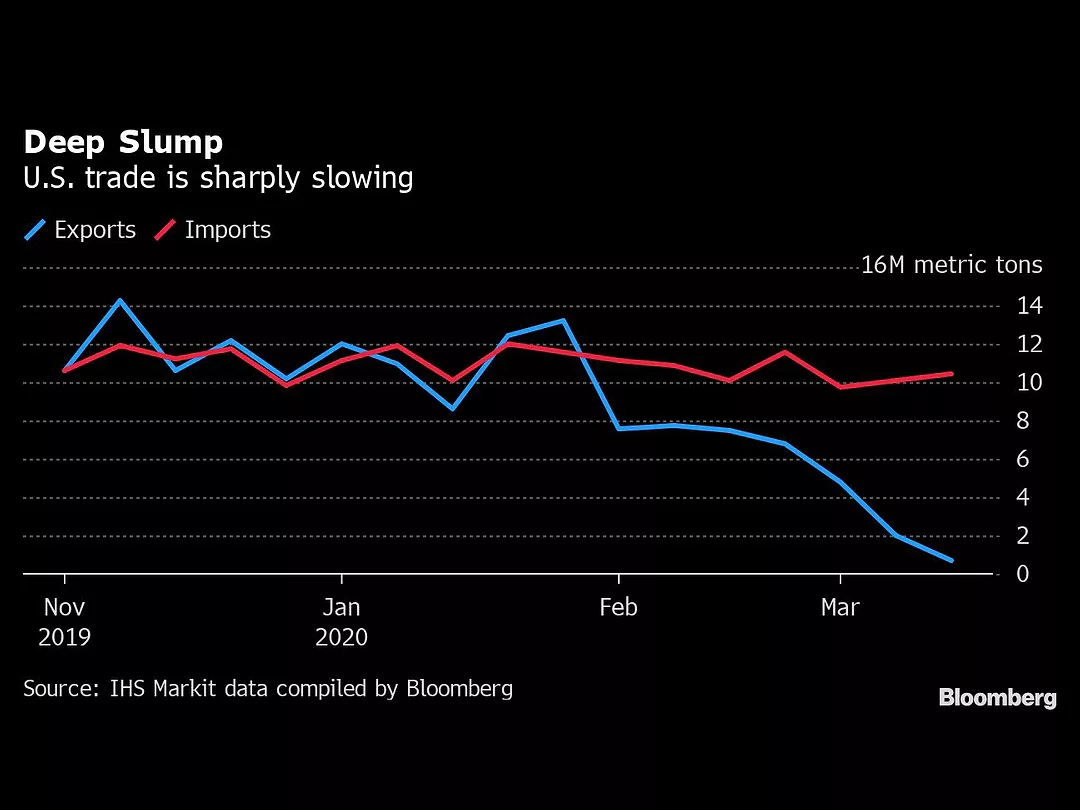
The past century of global economic integration through trade has been a steady march of progress, from trucks to pallets, from container ships to computers, from Asia’s manufacturing rise to artificial intelligence — all spinning a web of commerce so intricate that it spawned a new science.
Supply chains. They’re not just for mid-level managers and business schools anymore.
The COVID-19 pandemic is playing out in ways that even the most rigorous corporate stress test would have likely missed in its scope and severity. The closure for nearly two months of much of China’s economy. Weeks, perhaps months, of idled factories and millions pushed into unemployment in the U.S. and Europe. Looming humanitarian crises in poorer countries from India to Venezuela. The weight of human suffering on confidence as the death toll rises.
But despite such sudden shocks, and setting aside some initial shortages of toilet paper and urgent medical goods, the system of supplying the world’s economies — undergirded with fresh government support — should continue to meet basic needs even under historic strain, according to academics who study supply-chain logistics and management.
“As long as governments and central banks are willing to spend what it takes to avoid complete collapse, the supply chains should rebound,” said Sunil Chopra, a professor of operations management at Northwestern University. He cites the example of food supply in Italy, “which has continued to function remarkably well despite what is the most difficult set of circumstances in the world.”
Still, the disruptions are severe and just beginning in some regions. And while there have been shocks before, like the Sept. 11 terrorist attacks and the tsunami that devastated Japan a decade later, the system hasn’t encountered an economic steamroller that first flattens supplies and then hits demand like coronavirus.
The poster child for the use of globally integrated supply chains is the auto industry, and it halted manufacturing on both sides of the Atlantic this month. Then the world’s largest tractor maker, Deere & Co., ceased production in Brazil. Caterpillar Inc., a bellwether for the global economy, is suspending operations at some U.S. facilities.
Meanwhile, companies such as Walmart Inc. and Target Corp. are reckoning with a surge in shopping that’s sure to be followed by an economic downturn. Target Chief Executive Officer Brian Cornell said last week on a call with reporters: “America is largely out of business. There’s no playbook, and we are writing the script each and every day.”
While most goods are moving fine now, “it’ll be interesting to see what’s available in a few weeks, if the disease continues to accelerate, takes demand with it, and suppliers struggle to keep up,” said Chad Autry, the FedEx Corp.-endowed professor of supply chains at the University of Tennessee in Knoxville. “Getting extra supply in huge quantities isn’t like flipping a light switch.”
The problem isn’t just a collapse in demand for some goods — it’s also a need for the safety of the people on the front lines of the production process.
In Argentina, workers who handle ship mooring say they won’t bring in any vessels that haven’t been in quarantine for 14 days since leaving their last destination. A beef processing plant in Alberta, Canada, closed indefinitely after a worker tested positive for the virus. The Port of Houston temporarily closed two of its public container terminals after an employee contracted the disease. India’s government told all major ports that the coronavirus fight is a valid reason to halt some port operations.
Shipping and trucking industries are struggling to adjust to supply-and-demand imbalances that no one expected. Empty containers are piling up in ports where fewer ships are arriving to redistribute them. Trucking companies are dealing with similar issues.
One change that may come is a new focus on the role of people in the process.
“There is a new appreciation for retail store employees, factory workers and workers in logistics and transportation, energy, health care, education, and other industries responsible for sustaining life during shutdowns,” said Sergio Chayet, director of the master’s program in supply chain management at Washington University in St. Louis.
“Just like Sept. 11 brought permanent changes to airport and port security, it is likely this latest crisis will bring permanent changes to operations and supply chain risk management as it pertains to mitigating worker health risks and establishing contingency plans to protect them,” he said.
There are also longer-term considerations. Wistron Corp., one of Apple Inc.’s manufacturing partners, said half its capacity could reside outside China within a year. The declaration underscored how the Asian assemblers that help make iPhones and other gadgets are shifting to a higher gear after the coronavirus showed the folly of staking everything on one country.
Trade War
The disruptions across supply lines didn’t start with the pandemic. First came the U.S.-China trade war and higher tariffs on more than $500 billion on goods shipped in both directions.
“The public has been educated about how extensive supply chains had become in their global reach and how fragile they can be,” said Sang Kim, a Yale University professor of operations management. “It is easy to get a false sense of getting everything anytime anywhere, especially with the advent of one-day shipping, but the complexities of making that happen are often lost among many consumers.”
It’s too early to say exactly how companies with vast networks of suppliers will fare during and after the pandemic and how ultimately supply chains will be altered, according to the academics. There will no doubt be a political cry for sprawling firms to bring production back to their home countries, particularly for medical supplies.
With plenty of theoretical research behind it, supply chains have been honed over the years to ensure costs are kept low and hiccups are minimized, with risk models preparing for hurricane-closed port here, or a trucker’s strike there. After the pandemic, those will need to be reevaluated to include more widespread jolts.
“I am confident the system will recover from this event. It will take time and patience,” said Michael Knemeyer, a professor of logistics at Ohio State University. “I also predict it will end up causing lasting changes to how many supply chains operate.”
Popular Stories





100 Great Supply Chain Partners 2026: The Secret to Supply Chain Success
VIEW THE LATEST ISSUECase Studies


Visit Our Sponsors |
|
|
|
|
|
|
|
|
|
|
|
|
|
|
|
|
|
|
|
|
|
|
|
|
|
|
|
|
|
|
|
|
|
|
|
|
|
|
|
|
|
|
|
|
|
|
|
|
|
|
|