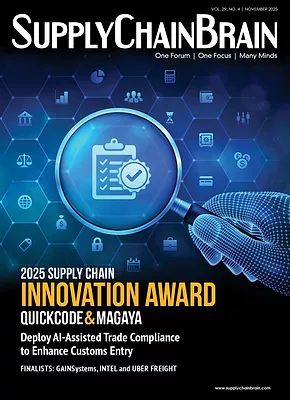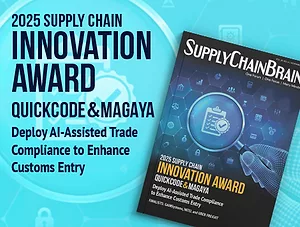
In our November issue, we highlight how supply chain practitioners are using innovation to push through all the
current turmoil and uncertainty, including the winner and finalists of The Supply Chain Innovation Award — a partnership between SupplyChainBrain and the Council of Supply Chain Management Professionals that's now in its 20th year.
View the Digital Flip Book here, or scroll down to read the articles in our November issue.
Together, an electrical distributor and a tech company harnessed the power of artificial intelligence to address the persistent challenge of lead time variability.
Intel internally developed a single, consolidated platform to streamline its transportation rate requests, saving more than $14 million and improving processes for carriers, too.
For manufacturers and supply chain leaders, these discoveries hint at a future where critical materials are produced more sustainably, affordably, and closer to home.
Reshoring of manufacturing is no overnight cure for current pain: It involves multiple considerations and commitment to an expensive, multi-year undertaking.
Amazon's JFK8 warehouse stands as both a milestone and warning: Winning an election is hard enough on its own, but forcing a first contract from a company with Amazon's resources and influence is another matter entirely.
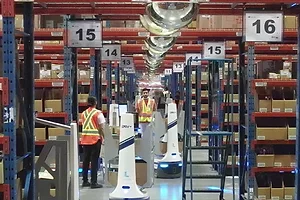
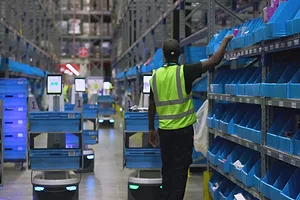
Locus Robotics provided the DSV team with the flexible, cost-effective technology that they sought; one that could scale during retail peak seasons, integrate seamlessly with existing workflows, and maximize throughput.
Autonomous robots designed to augment humans and adapt to operational shifts are helping companies make the pivot away from rigid, capital-intensive systems.
As technology and materials continue to advance, pallet pooling is likely to be driven by smarter tracking systems, automated inspection tools and increasingly durable plastic designs.
Despite years of investment, many facilities still depend on manual work and outdated processes. Yet the consequent challenges also present an opportunity.
Conventional scanning technologies will soon give way to AI vision systems that monitor operations in real time and gather continuous visual data on handling of orders and SKUs.
SCES powered by AI can optimize operations in ways no prior technology has managed to do, including attracting and retaining the next generation of workers.
As visibility within and beyond the four walls of the warehouse becomes more crucial than ever, RFID has emerged as a fully mature, scalable and proven technology.
The shift from longer-term storage and distribution of cases and pallets to the continuous flow of deconsolidated, repacked and cross-docked eaches has significantly impacted both the workplace and workflow.
A focus on mutual corporate environmental, social and sustainability goals not only fosters positive delivery experiences but also strengthens dedication to reputation and service excellence.
Reliable data, reporting KPIs, and SKU-level traceability deliver offsetting performance efficiencies, along with cost savings in energy, materials, and labor.