Q&A: Innovations in Last-Mile Delivery
E-commerce orders might travel efficiently over long distances, passing through multiple stages of their journey to the consumer, only to be tripped up in the last mile. That has always been the biggest challenge for online retailers, especially in crowded urban areas. Now it’s growing even more complex, with the emergence of new technologies and techniques such as lockers, drones, robots and the “click-and-collect” option. Following are excerpts from conversations between SupplyChainBrain editors and industry experts about the direction that last-mile delivery is taking today, and how retailers are striving to provide the consumer with multiple options and maximum convenience in receiving their goods.
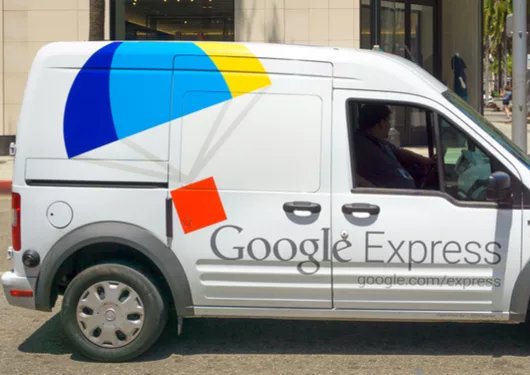
Mike Pezzicola, head of operations-expansion, Google Express: The challenges in the retail world to provide customers with quick delivery are twofold. First is building the capability to provide a good user experience on the front end, allowing customers to purchase items on their phones and other mobile devices. It’s about ensuring that you are visible, not just in your own application, but through many others, so that customers can find you.
The other challenge is building the network out to provide fast delivery. Many companies over the years have built excellent e-commerce warehouses across the country, where they were able to provide two-, three- or four-day service. Now they’re focused on improving the speed of delivery, leveraging stores that are down the street from customers. You’re taking facilities that were designed for foot traffic, and using the network and inventory to get material to the customer’s doorstep.
Tamir Gotfried, general manager-Americas, Bringg: Part of the challenge includes understanding urban congestion, and how the last mile can affect operations. When an order is expected to arrive that afternoon, and it’s delayed by something like bad weather or a flat tire on the truck, the supplier needs to communicate that to the consumer so it’s not in the dark.
Matt Howitt, vice president of product, Convey: There are still tremendous challenges for retailers large and small in conquering the last mile, especially with items that are big and bulky. People want to buy those things online now, but getting them to the home with a consistently high level of service is incredibly difficult. Retailers have very complicated networks of carriers that they need to leverage in order to provide that level of service.
Neil Sharma, senior vice president, nuVizz: We’re seeing a chaos of technology convergence. Systems are getting archaic. Companies are realizing that the speed of juggernauts like Amazon and Uber is creating ripple effects. Every company in the value chain is having to respond. Smaller companies are starting to get into the act with new technology. And larger companies having to ask, “Is my in-house technology as powerful and quick as I need it to be?”
Two trends come out very clearly. People are throwing money at both technologies and certain verticals without understanding them. We think opportunities will become ripe for those companies that have invested a little bit of time and know-how to see exactly what value-add they provide. They can’t be all things to all people.
Pezzicola: The state of last-mile delivery in the U.S. is still emerging, in terms of the services that customers want. Expectations are changing. What’s the speed of delivery that people expect now? Obviously it’s faster than it used to be, but how fast do they truly expect something to be delivered without a surcharge? And what are they willing to pay a surcharge for? I think folks feel it’s appropriate to pay a surcharge for a hot meal that’s delivered to the home. But there are other types of products for which they expect fast delivery to be included in the cost of the purchase. Whether that’s a big bulk purchase from a warehouse store, or maybe an electronics purchase, the customer has spent a large amount of money and expects delivery to be included in the cost.
Gotfried: When it comes to last-mile fulfillment, customer expectations today have been pretty much set by the Ubers and Amazons. They’re dictating the rules of the game. There’s a new standard, and customers no longer want to be in the dark about when their package is going to arrive. They’re no longer going to accept sitting around between 12 and 5 waiting for a delivery, having their entire day ruined. That attitude is really impacting the way that organizations deliver in the last mile.
Geoff Kneale, executive director, Click n Collect: Lockers are growing in popularity and acceptance on a very steep incline. They’re changing consumer behavior. The only thing that could slow that record rate of growth is talk about drones. Frankly, I can’t see it — there are so many problems, and you still have to be home to accept the goods. The beauty of lockers is you don’t have to be home. You can elect to receive delivery whenever and wherever you want to. It’s absolute convenience.
Egil Moller Nielsen, senior vice president and head of business, Penguin Pick-Up: Disruption in the last mile presents consumers with many choices. You can have it delivered to the home, you can have a click-and-collect option, you can buy online and pick up in the store, and you can have a locker solution.
Nick Handrick, head of operation, Starship Technologies: Last-mile delivery is a process that has been around for as long as we’ve been doing delivery. Now we’re starting to integrate new technologies into it. Companies like Uber are operating in an on-demand atmosphere. There are a number of automated services that are starting to tie into processes that have already been in place, to make them more streamlined and cost-effective.
Pezzicola: “Delivery to the doorstep” is a phrase that really means improving the convenience of my day. Oftentimes that’s delivering to my home. But it can also mean consolidating my errands into one location, whether that’s through a locker or curbside pickup. When we think about home delivery, we need to make sure we’re including all of the innovative aspects of last-mile delivery today.
Gotfried: The last mile today provides a lot of options, both to consumers and suppliers. From the consumers’ point of view, you can have an order delivered within a couple of days, next day or even the same day. The model of elastic delivery comes into play. But retailers are given options as well. They can use their own fleet of drivers, crowdsource to obtain drivers, or rely on multiple couriers. In all cases, it’s important to maintain the service level that they promise to customers.
Pezzicola: Delivery could be taking place in malls or retail areas, where people are going to pick up groceries, and also have access to the locker of another retailer. Or service providers can consolidate retail orders and bring them all to one location. In addition, there are a number of great technologies coming out now. Whether it’s drones or robots delivering in people’s neighborhoods in the near future, we’ll see how they play out.
Gotfried: Service providers are offering more visibility into their operations. They’re giving customers the opportunity to have a voice — to comment on the experience, and communicate not only with dispatchers but also with drivers. As a result, customers feel a part of that experience. Providers are engaging them from the entire supply chain point of view.
Howitt: There’s a tremendous amount of innovation that’s happening in the last mile, including things like drones and lockers. But from my perspective, the innovation is going to happen more on your mobile device than anywhere else. For a consumer, that’s the epicenter of everything you do today. It’s the device you want to be able to use to get information, schedule deliveries and make changes. While I think there will be many innovative things coming down the pike, it’s all going to be controlled through your phone.
Kneale: E-commerce lockers are still growing in popularity. We’ve got a lot of clients who are placing them outside brick-and-mortar stores to increase their trading hours. Lockers can also be found in large residential apartments, car parks, universities, and subway stations. It’s unlimited, really. We’ve been placing lockers around the world for about six years now. We’ve been able to get through very harsh summers and severe winters in areas such as the Americas. Canada has embraced them enormously. The U.S. is just starting off. And they’re already in South America.
Nielsen: Click and collect allows you to shop on a website, have the product distributed to a collection point, then pick it up at a time of your own choice. In terms of geographies for that option, our focus in the beginning was on suburban areas. Now we’re turning to urban areas, which present the biggest challenges. We’re creating high-speed collection points there, even in office towers.
Kneale: The future of locker technology is that it will bring many different communities together, whether through transport arms, post offices and the like. They’re a little like automated teller machines. ATMs started off as islands. Each bank had its own system. It was very frustrating for consumers, where they had to pay extra to take money out from a different bank. I see lockers as giving us one central system.
Handrick: Robots are all the talk right now in a number of fields, especially last-mile delivery. Last-mile accounts for about 60 percent of the cost of total delivery for any type of product. Robots allow that entire process to be brought down to a cost that is acceptable to the consumer — something that people are interested in paying for.
Howitt: I see a wave of innovation that’s going to go on for years and years. It’s going to be a slow and steady evolution, where new stuff is coming out on almost a monthly basis. In five years, we’ll realize that a revolution has occurred.
Gotfried: It might look like a radical change that’s coming, but eventually that change will become the standard. Customers are demanding visibility. If you’re not providing that kind of service today, you’re already behind.
Resources:
Popular Stories



100 Great Supply Chain Partners 2026: The Secret to Supply Chain Success
VIEW THE LATEST ISSUECase Studies


Visit Our Sponsors |
|
|
|
|
|
|
|
|
|
|
|
|
|
|
|
|
|
|
|
|
|
|
|
|
|
|
|
|
|
|
|
|
|
|
|
|
|
|
|
|
|
|
|
|
|
|
|
|
|
|
|